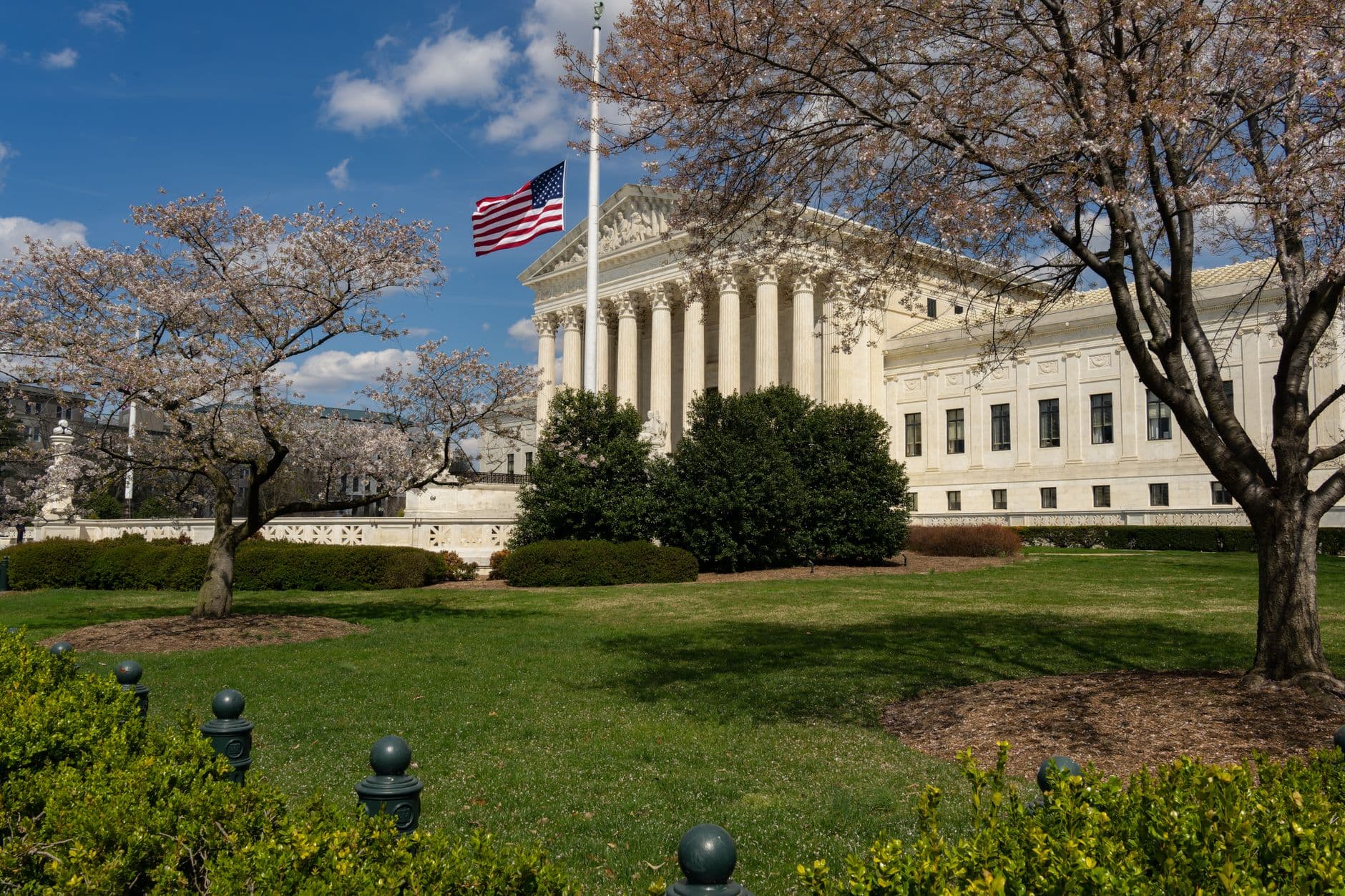
Update, July 22, 2026. Since this analysis first published on June 11, two things have happened. On June 12, 2026 the government filed a Notice of Appeal to the First Circuit Court of Appeals (Case No. 26-1703). On July 15, 2026 the district court denied the government's request to pause the ruling during appeal. The four vacated USCIS policies remain vacated and USCIS continues adjudicating pending benefits for nationals of the covered countries throughout the appeal. Full detail in the "What actually happened next" section below.
On June 5, 2026, Chief U.S. District Judge John J. McConnell Jr. of the federal court in Rhode Island issued a 135-page ruling vacating four Trump administration policies that had frozen immigration benefits for nationals of 39 countries since the start of the year. The ruling, in Dorcas International Institute of Rhode Island v. USCIS, orders USCIS to resume processing green cards, work permits, citizenship applications, and asylum decisions affecting hundreds of thousands of pending cases.
This is the most consequential US immigration ruling of the year, and it lands on the population our readers have been asking about for months. If you have a pending application, or a family member with one, this is the news that changes your timeline.
It is also, importantly, not the end of the story. The Department of Justice is expected to appeal, the underlying travel-restriction proclamations remain in force, and a separate State Department pause on immigrant visa issuance abroad, affecting a broader 75-country list, was not addressed by this ruling. What's actually different starting this week is the USCIS processing of cases for people already in the queue. The political and legal fight over the broader restrictions continues.
Here's what the ruling actually says, who it affects, and what affected applicants should do right now.
What Judge McConnell ruled
Judge McConnell, the chief judge of the federal district court in Rhode Island, found that USCIS acted unlawfully when it imposed processing freezes on applications from nationals of 39 countries earlier this year. The ruling vacates four specific policies, not one freeze:
- The Benefits Hold Policy. Placed all immigration benefit applications from nationals of the 39 travel-ban countries on indefinite hold pending "comprehensive review."
- The Global Asylum Hold Policy. Paused all USCIS asylum decisions regardless of country of origin.
- The Comprehensive Re-Review Policy. Directed USCIS to reopen and re-examine approved applications filed by nationals of the 39 countries since January 20, 2021.
- The Country-Specific Factors Policy. Directed officers to treat an applicant's country of birth or citizenship as a "significant negative factor" in discretionary decisions when the country was subject to the travel ban.
The court found all four policies violated the Administrative Procedure Act and conflicted with existing immigration law, were "arbitrary and capricious" because USCIS could not provide a reasoned explanation, and that the administration's intent was rooted in "unlawful bigotry" against immigrants from certain countries, language the judge used directly. The government, the court noted, refused to defend in court the public statements President Trump and Secretary Noem had made about the affected populations.
The court ordered USCIS to resume normal adjudication of pending cases. It did not strike down the underlying travel-restriction proclamations. Those remain in place under Presidential Proclamations 10949 (June 2025) and 10998 (December 2025).
How we got here, and what the "75 countries" number actually refers to
If you read our March 31 coverage, the figure that circulated was "75 countries." That's a real number, but it refers to a different policy. To untangle:
- June 4, 2025: Presidential Proclamation 10949. Restricted entry from 19 countries (12 full bans, 7 partial).
- December 16, 2025: Presidential Proclamation 10998. Expanded the restriction to 39 countries plus Palestinian Authority travel documents. Took effect January 1, 2026.
- January 1, 2026: USCIS policy memorandum. Froze benefit adjudication for nationals of those 39 countries. This is what McConnell just vacated.
- Separately, the State Department paused immigrant visa issuance at US embassies for nationals of approximately 75 countries. That State Department pause remains in effect. McConnell's ruling does not touch it.
So the McConnell ruling unfreezes USCIS adjudication for the 39 covered countries: green cards, work permits, citizenship, and asylum decisions for people already in the US or in the pipeline. It does not unfreeze the State Department's 75-country pause on new immigrant visa issuance at embassies abroad. If you were trying to get to the US through consular processing from one of the 75 countries, you may still be blocked.
The 39 countries on Proclamation 10998 span Africa (most heavily), Asia, the Middle East, Latin America, and parts of Europe and Central Asia. The full list is in the proclamation text itself, which we'd recommend checking against your specific nationality rather than relying on any third-party summary. The list was amended between June 2025 and December 2025, and partial vs. full restrictions vary by country.
What's unfrozen, starting this week
For nationals of the 39 affected countries, USCIS is now required to resume processing:
- Adjustment of status (I-485): pending green-card applications inside the US
- Naturalization (N-400): citizenship applications
- Employment authorization (I-765): work permits, including OPT and DACA renewals
- Asylum decisions: pending affirmative asylum cases
- Travel documents: advance parole and reentry permits
- Family-based immigrant petitions (I-130): including spousal petitions
What's not addressed by this ruling:
- Consular processing at US embassies abroad. The State Department's separate 75-country pause remains in force
- The underlying travel bans. Proclamations 10949 and 10998 still restrict entry
- The diversity lottery and certain employment-visa categories had separate restrictions that may persist
In practical terms: if you had a green card or citizenship application in the US that was frozen because of your nationality, the freeze is over. If you were trying to get to the US from a restricted country through consular processing, the underlying travel restriction may still block you.
What pending applicants should do this week
Based on what the ruling actually orders and how USCIS typically reacts to district court orders:
- Pull your USCIS account online and check the status of any pending case. Status changes from "Suspended" or "On Hold" to "Pending" should start appearing within 7–14 days.
- If your case was actively denied solely because of the freeze, talk to your immigration lawyer about a Motion to Reopen. The ruling provides explicit grounds.
- File any pending I-485, N-400, I-130, or I-765 documents you've been holding. USCIS is required to accept them.
- Don't expect retroactive priority-date credit automatically. If your I-485 was paused for four months, those four months are gone. File follow-on paperwork (RFE responses, biometrics, work permit renewals) on the normal schedule from here.
- Watch for the DOJ appeal. A notice of appeal and likely emergency stay request to the First Circuit are expected within 30 days. A stay would let USCIS refreeze pending appeal; absent a stay, the order remains in effect.
What actually happened next: the appeal timeline (updated July 22, 2026)
Two events since the June 5 ruling have set the shape of what follows:
- June 12, 2026: The government filed a Notice of Appeal to the First Circuit Court of Appeals (Boston). Case No. 26-1703. This was expected, since the June 11 draft of this piece predicted "within 30 days."
- July 15, 2026: Judge McConnell denied the government's request to pause the ruling pending appeal. This is the critical procedural event most media coverage skipped. The four vacated USCIS policies remain vacated throughout the appeal. USCIS is required to continue adjudicating pending benefits for nationals of the covered countries.
What this means practically:
- The freeze is not coming back through summer 2026, and almost certainly not through fall 2026. A stay denial at the district level means the government's next escape route is an emergency stay motion at the First Circuit itself, which appellate courts grant reluctantly and rarely on this fact pattern.
- The appeal on the merits will run 6–12 months. First Circuit oral argument is likely late 2026 or early 2027. If affirmed, the freeze is dead permanently. If reversed, the case likely goes en banc or to the Supreme Court, another 12–18 months.
- The State Department 75-country consular pause is not affected by any of this. Different agency, different legal authority, not part of the Dorcas litigation. If you're trying to get to the US through a US embassy abroad, the pause continues regardless of the McConnell ruling's fate.
- Pending applicants can plan on the freeze staying vacated for at least the next 6 months. If you have an I-485, N-400, I-765, or asylum case, USCIS is required to process it. If a case is stuck, this ruling is your leverage.
The base case shifted meaningfully with the July 15 stay denial: what was "the freeze stays vacated through summer 2026 at minimum" is now "the freeze stays vacated through the full merits appeal, which won't conclude before mid-2027."
If you're affected, and asking "is the US still worth it?"
If you're a national of one of the 39 countries and you're now reconsidering whether the US is the right long-term move, this is exactly what Plan B is built for.
Wondering how this applies to your own case? This article is general. A Personal Relocation Assessment is not: our expert researches your nationality, income, household and timeline against the law as it stands, names the legal instrument behind every figure, and tells you where you actually qualify and what is most likely to go wrong. $197, delivered in 3 working days. Get my assessment →
For nationals of the 39 countries specifically, the most-asked-about alternatives in our inbox:
- Canada Express Entry via the STEM category-based draw, most relevant for tech workers. Note that Canada removed job-offer CRS points in March 2025, which changes the math from earlier guides
- Germany Blue Card, with a shortage-occupation threshold of €45,934/yr (effective Jan 2026) and an EU passport path at 6–8 years
- Portugal D7 and D8, the Atlantic gateway, though the 10-year citizenship law shifted the long-term math in May
- UK Skilled Worker, with a sponsor requirement and 5-year settlement
- Australia Skilled Migration, with slower invitation cycles but durable PR
What this means for the broader US immigration trajectory
Zoom out: between the visa bonds requirement, the social media screening regime, continuous vetting, and the parallel State Department 75-country pause on immigrant visa issuance, the underlying direction of US immigration policy in 2025–26 is restrictive. McConnell's ruling pushes back on one specific set of implementations, but the political will behind the broader restrictions hasn't changed.
For a foreign national making a 5–10 year decision about where to build a life, the honest read is: the US remains available for entry through visa categories that aren't currently frozen, but the predictability of the system, the thing that used to make the US the default choice, is meaningfully worse than it was in 2023. A court ruling can vacate a policy. It can't vacate the underlying volatility.
Quick reference
- Ruling: June 5, 2026 · Chief Judge John J. McConnell Jr., US District Court, Rhode Island
- Case: Dorcas International Institute of Rhode Island v. USCIS
- Length: 135 pages
- Four policies vacated: Benefits Hold, Global Asylum Hold, Comprehensive Re-Review, Country-Specific Factors
- Affected nationals: 39 countries plus Palestinian Authority travel documents (per Presidential Proclamations 10949 and 10998)
- Benefits unfrozen: I-485, N-400, I-130, I-765, asylum decisions, travel documents
- Not addressed: State Department's separate 75-country pause on immigrant visa issuance at embassies; underlying Proclamations 10949 and 10998
- Appeal expected: DOJ Notice of Appeal within 30 days; emergency stay motion likely
- Realistic timeline: Freeze remains vacated through summer 2026 minimum; full resolution into 2027
- What pending applicants should do: Pull USCIS account, file held documents, talk to immigration lawyer if previously denied solely on freeze grounds
Sources: American Immigration Council: Federal Court Blocks Sweeping Pause on Legal Immigration for Nationals of 39 Countries; Boston Globe: Federal court in Rhode Island strikes down Trump immigration freeze based on nationality; PBS NewsHour: Judge strikes down Trump policy that halted asylum decisions for 39 countries; Erickson Immigration Group: Federal Court Blocks DHS Immigration Policy Targeting 39 Countries; National Law Review: Federal Court Vacates USCIS Benefits Hold Affecting Applicants From 39 Countries.
Plaintiffs were represented by Democracy Forward (Skye Perryman, President and CEO). The plaintiff coalition included Dorcas International Institute of Rhode Island, Refugee Dream Center, Service Employees International Union, United Automobile Aerospace and Agricultural Implement Workers of America, African Communities Together, Venezuelan Association of Massachusetts, Partnership for the Advancement of New Americans, and American Gateways.
Related this month on ExpatLife
- Record Numbers of Americans Are Leaving the U.S. in 2026: 180K+ Americans relocated in 2025, plus the 6-profile destination matrix for who fits which country.
- Ireland Is Now the Fastest EU Passport for Americans: after Portugal doubled its citizenship timeline in May 2026, Ireland's 5-year Stamp 4 route is now the fastest non-investment EU passport.
- Spain vs Portugal for American Digital Nomads in 2026: the IFICI-vs-Beckham tax comparison that most guides skip.
- The 5 Countries Where American Retirees Actually Get the Best Healthcare in 2026: Portugal, Malaysia, Panama, Costa Rica, and Spain, ranked by real access rather than marketing.
- EB-2 India Just Retrogressed 10 Months: Your Realistic Plan B for 2026: for Indian nationals reconsidering the US timeline entirely.
This article is for informational purposes only and does not constitute legal advice. Consult a licensed US immigration lawyer before making decisions about your pending applications or visa strategy. The legal landscape on this issue is actively shifting, so verify current status against the court docket and your USCIS account before acting.
Personal Relocation Assessment
This article is general. Your situation is not.
Tell us your nationality, income and timeline and we research it by hand: where you actually qualify, the route, the current threshold with the law it comes from, and what usually goes wrong in a position like yours. Written by an expert, in 3 working days.
Enjoyed this article?
Subscribe for more expat tips and guides.
Which country is right for you?
Answer 6 quick questions about your budget, lifestyle, and priorities. Our AI ranks 122 countries and builds a personalised relocation plan.
Enjoyed this article? Share it with fellow expats


