Western Europe
Central & Eastern Europe
Asia & Middle East
Americas
Oceania & Africa
Expat Topics
🇷🇴 The expat guide · 2026
Romania.
EU membership, 10% flat income tax, and a 1% micro-enterprise revenue tax - Transylvania, the Carpathians, and a thriving tech scene from €1,000/month
Income Tax
10% flat
Joint-lowest in EU. IT exemption ABOLISHED Jan 2025.
Micro-Enterprise Tax
1% on revenue
SRL micro up to €100,000/yr (halved from €250K). Activity restrictions removed 2026.
Digital Nomad Visa
~€3,700/mo income
3× avg salary. First 183 days tax-exempt. Law 22/2022.
Dividend Tax (2026)
16%
Raised from 10%. VAT also raised: 19%→21%.
Min Wage (2026)
RON 4,050–4,325
~€810-865/mo. RON 4,325 from Jul 2026. SRL min capital: RON 500 (was 1).
EU & Schengen
Full member
EU 2007, Schengen Jan 2025 (land borders). ETIAS coming Q4 2026.
Verified August 13, 2026
See 6 more figuresCan you actually move to Romania?
We research your nationality, income and timeline against Romania's current rules, and tell you whether you qualify and what it actually costs.

Why move to Romania?
Romania is one of Europe's most overlooked expat destinations - an EU and Schengen member (joined January 2025) with the joint-lowest personal income tax in the European Union (10% flat), a remarkable 1% micro-enterprise revenue tax for businesses under €100,000/year, EU legal protections, and a cost of living that still feels Balkan in the best sense. Bucharest, the capital of 2.5 million, is a city of extraordinary contradictions - Belle Époque boulevards and communist-era brutalism, a thriving café and nightlife scene, growing tech investment, and 1-bedroom apartments from €370/month outside the centre. Cluj-Napoca, two hours north in the heart of Transylvania, has earned the nickname 'Silicon Transylvania' for its concentration of IT companies, tech startups, and students - and is consistently cheaper than Bucharest. Romania's Digital Nomad Visa (Law 22/2022) provides a formal residency pathway for non-EU nationals earning ~€3,700/month from non-Romanian employers. The first 6 months are entirely tax-exempt. Romania's geography is extraordinary - the Carpathian Mountains, Danube Delta (UNESCO Biosphere Reserve), medieval Saxon towns (Brașov, Sibiu, Sighișoara), painted monasteries of Bukovina, and a Black Sea coast. EU membership, Schengen travel, the lowest flat tax in the EU, and a cost of living 57% lower than Berlin make Romania's value proposition for expats almost impossible to match within the European Union.
The rest of the Romania numbers
The figures that did not fit in the summary above.
| Figure | Detail |
|---|---|
| Pres. Nicușor Dan2025 election win | Centrist; signed 2% VAT hike (19%→21%) Jul 2025 reversing campaign pledge under EU/debt pressure; PM Ilie Bolojan |
| Low-Income Tax BreakRON 300 (H1) / 200 (H2) | 2026 ordinance: non-taxable salary portion for min-wage workers to boost net income |
| DN Visa Income UpdatedRON 26,730/mo | 3× avg gross wage (RON 8,910); ~€5,600/mo; 6-mo permit extendable; foreign income tax-exempt |
| Deficit Trajectory6.4% (Nov 2025) | Down from 7.15% in 2024; Bolojan govt tightening; turnover tax cut 2026, fully removed 2027 |
| EES Live 10 Apr 2026Schengen entry/exit tracking | Entry/Exit System fully operational across all Schengen Area borders (incl. Romania) from 10 Apr 2026 |
| Blue Card ReformsUp to 3-yr permits | Romania relaxed EU Blue Card framework; permits now valid up to 3 years; certain applicants eligible on professional experience alone |
The Romania basics
10 essentials every expat should know - from the practical to the political.
Is Romania actually your best option?
This page tells you what Romania is like. It cannot tell you whether it beats the four other countries you should be looking at, because that answer changes with your passport. Income thresholds, tax treaties and citizenship timelines are all nationality specific, and the general rule is often not the rule that applies to you.
A Personal Relocation Assessment answers it for your case. You tell us your nationality, income, household and timeline, and we our expert researches it against the law as it stands: which countries you actually qualify for, the route, the current threshold with the instrument it comes from, and what is most likely to go wrong in a position like yours.

Food culture
Sarmale (stuffed cabbage rolls), mici (grilled minced sausages), mămăligă polenta, mititei, țuică plum brandy - Romania's hearty plate
Explore

Festivals & traditions
Transylvania (Dracula heritage), Bran Castle, Painted Monasteries of Bukovina (UNESCO), Sibiu European Capital of Culture, Romanian Athenaeum
Explore

Coast & nature
Carpathian Mountains, Danube Delta (UNESCO biosphere), Black Sea coast (Mamaia/Constanța), Bucegi Mountains - extraordinary natural range
Explore

Heritage & landmarks
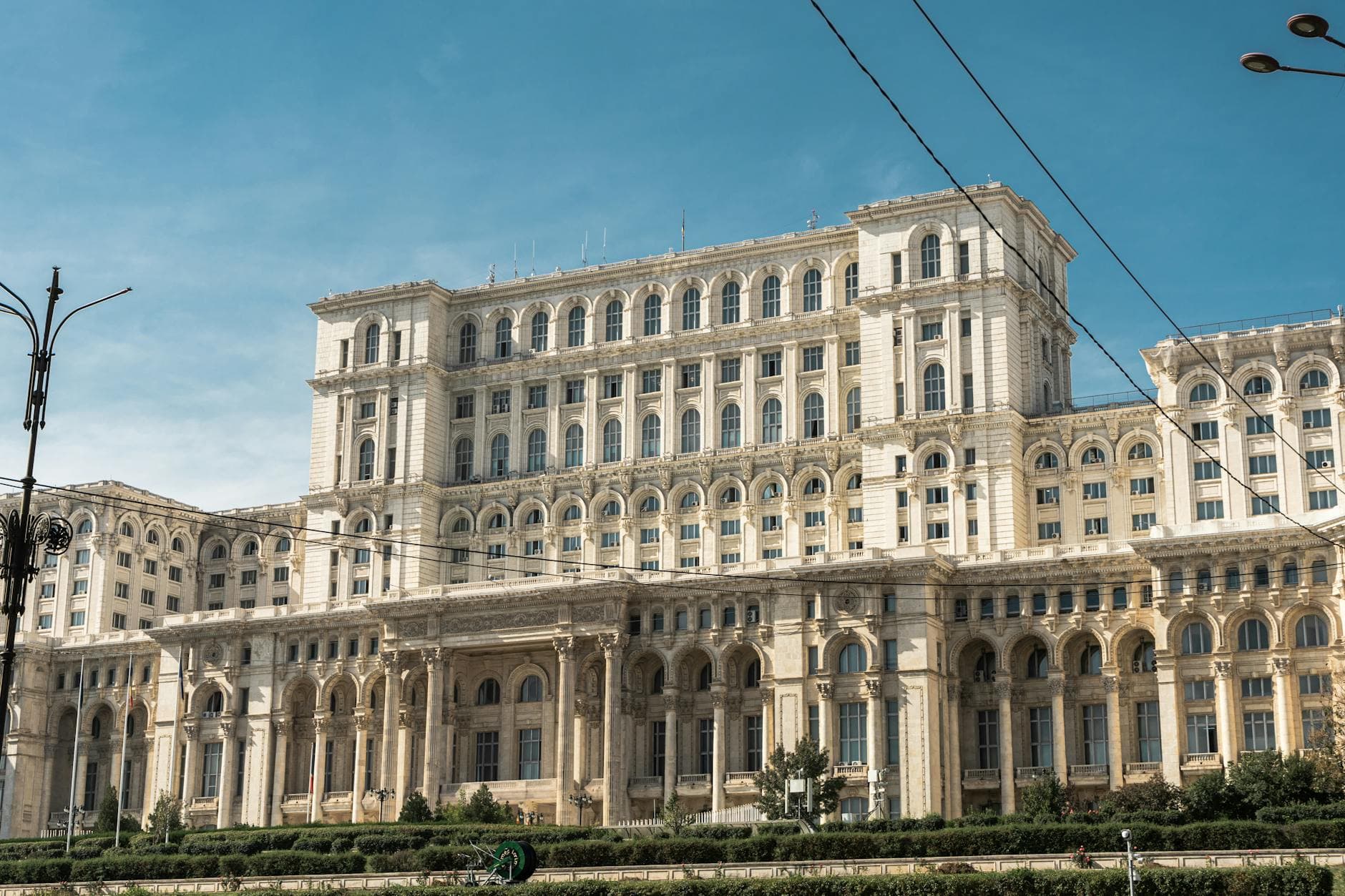
Palace of Parliament (world's 2nd-largest building), Bran Castle, Peleș Castle (Sinaia), Romanian Athenaeum, Sibiu Old Town
Explore
8 reasons people stay longer than they planned
The pull of Romania isn't one big thing - it's a stack of small ones, each compounding the others.
10% Flat Income Tax and 1% Micro-Enterprise Tax - Joint-Lowest in the EU
10% flat income tax (joint-lowest in EU). Micro-enterprise (SRL Micro): 1% on revenue up to €100,000/yr (threshold halved from €250K; activity restrictions removed 2026). KEY CHANGES: IT sector income tax exemption ABOLISHED Jan 2025. Dividend tax raised 10%→16%. VAT raised 19%→21%. Capital gains (direct): 10%→16%. SRL min capital: RON 1→500. Despite these increases, Romania remains one of Europe's lowest-tax EU countries for both employment and business.
Full EU and Schengen Member - All Rights, Frictionless Travel
Romania joined the Schengen Area in January 2025, giving residents frictionless travel across 27 countries. EU membership since 2007 means EU citizens can live, work, own property, and access public services with no visa or permit needed. For non-EU expats, a Romanian residence permit provides Schengen mobility. Romanian law aligns with EU regulations on employment rights, data protection, consumer rights, and property ownership - giving expats the full protection framework of the European Union.
'Silicon Transylvania' - Cluj-Napoca's World-Class Tech Ecosystem
Cluj-Napoca has earned its 'Silicon Transylvania' nickname. The city hosts significant offices for Bosch, Nokia, Continental, Accenture, Oracle, and hundreds of Romanian tech companies and startups. The Babeș-Bolyai University produces 50,000+ students. The TIFF (Transylvania International Film Festival) is one of Southeast Europe's leading cultural events. Rents are 15–25% cheaper than Bucharest, yet the tech infrastructure, English proficiency, and quality of life match or exceed the capital. Cluj-Napoca is increasingly the choice of serious tech workers and entrepreneurs who want Romania without the Bucharest chaos.
Bucharest: Belle Époque Architecture, Vibrant Nightlife, EU Infrastructure
Bucharest is a city that consistently surprises visitors. The 'Little Paris' nickname (partly ironic, partly accurate) refers to the tree-lined boulevards, grand fin-de-siècle buildings, and Arc de Triomphe replica on Calea Victoriei. The Floreasca and Victoriei districts host excellent restaurants, rooftop bars, and a café culture that rivals Warsaw or Prague at half the price. The Palace of the Parliament - the world's second-largest building by volume - is a surreal communist-era monument. The city is loud, messy, and endlessly interesting.
Digital Nomad Visa with 6-Month Tax Exemption
Romania's Digital Nomad Visa (Law 22/2022) provides a formal legal route for non-EU remote workers. The first 183 days are exempt from Romanian income tax and social contributions. Income requirement: ~€3,700/month (3× avg gross salary). After 183 days, 10% flat tax on worldwide income applies. D-type long-stay visa → 12-month renewable residence permit, with full Schengen travel rights since January 2025.
Carpathian Mountains, Transylvania, and Europe's Best-Preserved Medieval Towns
Romania's landscapes and heritage are extraordinary. The Carpathian Mountains offer skiing at Poiana Brasov and Sinaia, trekking, bear-watching in Zărnești, and wolf habitats. Brașov, Sibiu, and Sighișoara are perfectly preserved medieval Saxon towns that rival Bruges or Prague for beauty at a fraction of tourist intensity and cost. Dracula's Castle (Bran) is nearby Brașov. The painted monasteries of Bukovina (UNESCO) are unique in all of Europe. The Danube Delta - Europe's largest river delta and a UNESCO Biosphere Reserve - offers birdwatching and boat travel through 5,800 km of waterways.
Private Healthcare at EU Standards - Fraction of Western Prices
Romania has a thriving private healthcare sector anchored by the Regina Maria / Euroclinic network, MedLife, SANADOR, and Medicover - all with English-speaking staff and modern facilities. A GP consultation costs €20–€50; a specialist €40–€80. Private health insurance costs €300–€1,000/year. Romania has become a notable medical tourism destination for dental work, orthopaedics, and cosmetic procedures, with procedures priced 40–70% below Germany or the UK.
Outstanding Food, Wine, and a Restaurant Scene Punching Above Its Weight
Romanian cuisine is underrated internationally but beloved by those who discover it. Sarmale (cabbage rolls), mici (grilled minced meat rolls), mămăligă (polenta), and ciorba (sour soups) are hearty and delicious. Romanian wines - particularly from Dealu Mare, Cotnari, and Jidvei - are excellent and very cheap. Bucharest's restaurant scene has genuinely world-class establishments for prices that would be considered budget in London or Berlin. A mid-range restaurant meal for two with wine runs €30–€50.
3 cities, 3 different lives
Pick the rhythm that fits - capital buzz, beach mornings, or a slow-living escape.

Bucharest
Belle Époque boulevards and communist ambition - EU capital with 10% flat tax, full Schengen access, and all-in living from €1,000/month
€1,000–€1,400 /mo
Tech professionals, entrepreneurs, remote workers, EU-base seekers

Cluj-Napoca
'Silicon Transylvania' - Romania's tech hub and university city, 15–25% cheaper than Bucharest, with medieval streets and Carpathian access
€800–€1,100 /mo
Tech workers, entrepreneurs, students, culture-focused expats

Timișoara
Romania's 'Little Vienna' - EU Capital of Culture, booming tech scene, and €400/month apartments
€800–€1,400 /mo
Tech workers, digital nomads, budget-conscious expats, culture lovers
Everything, in plain words
Visa rules, healthcare, schools, taxes - written like a friend would explain it, not like a brochure.
Visa & Residency
Romania's Digital Nomad Visa (Law 22/2022) is a formal two-stage process requiring ~€3,700/month in foreign income - one of the higher requirements among European DN visas, reflecting Romania's EU status. The first 6 months of Romanian residence are entirely tax-exempt. EU/EEA/Swiss citizens need no visa. Romania joined Schengen in January 2025, giving residents frictionless travel across 27 countries. The DN permit grants 12 months renewable, with a total temporary residence cap of 3 years.
Read 🏥Healthcare
Romania's public healthcare system (CNAS) is chronically underfunded - among the lowest EU investment rates at approximately 5% of GDP. Private healthcare is the overwhelming choice of expats and even many Romanians in cities. Bucharest has excellent private hospitals including Regina Maria / Euroclinic, MedLife, SANADOR, Medicover, and Monza - all modern, English-speaking, and affordable by EU standards. A GP consultation costs €20–€50; specialist €40–€80. Private insurance runs €300–€1,000/year locally.
Read 💰Cost of Living
Romania combines a 10% flat personal income tax (joint-lowest in EU) with a remarkable 1% micro-enterprise revenue tax for SRL companies under €100,000/year (2026). A single expat can live comfortably in Bucharest for €1,000–€1,400/month and in Cluj-Napoca for €800–€1,100/month. Key 2026 changes: dividend tax raised to 16%; micro-enterprise threshold tightened to €100,000 (from €250,000 in 2025). The currency is the Romanian Leu (RON); euro adoption is a medium-term aspiration but not imminent.
Read 🏠Housing
Housing in Romania is affordable by EU standards. Bucharest 1-bedroom apartments average €510–€700/month in the city centre and €370–€470/month outside. Cluj-Napoca runs €330–€450/month in the centre and €230–€300/month outside. Property prices have risen significantly (30–50% in Bucharest since 2020) but remain well below comparable EU cities. The rental market requires navigating Romanian-language listings, but expat communities and agents help considerably.
Read 💼Work & Business
Romania has the most impressive tech ecosystem in Southeast Europe outside Warsaw or Prague. Bucharest hosts major tech companies including Amazon, Oracle, HP, Bitdefender (the Romanian cybersecurity unicorn), and UiPath (a global RPA leader founded in Romania and valued at €14 billion). Cluj-Napoca ('Silicon Transylvania') has a concentration of Bosch, Nokia, Continental, and hundreds of Romanian tech companies. The 1% micro-enterprise revenue tax and 10% flat PIT make Romania one of the EU's most attractive jurisdictions for small business owners.
Read 🌆Daily Life
Daily life in Romania combines the warmth and hospitality of a Balkan culture with EU standards of infrastructure and rights. Bucharest is loud, messy, and genuinely exciting - a city that feels alive. Cluj is more refined, more academic, and better organised. Romanian food culture is excellent and remarkably cheap. The country's natural and heritage landscape - Transylvania, the Carpathians, the Danube Delta, medieval Saxon towns - provides extraordinary quality of life for those who explore it.
Read ✈️Moving Guide
Moving to Romania is straightforward for EU citizens - no visa, register within 3 months. For non-EU nationals, the two-stage Digital Nomad Visa process takes 2–3 months; income requirement is high (~€3,700/month). Shipping from Western Europe is well-served by Balkan road freight corridors and direct routes. Romania's Schengen accession (January 2025) simplified border crossing from EU neighbours.
Read 📚Education
Romania has a strong academic tradition, particularly in engineering, mathematics, and computer science. Bucharest has well-established international schools for expat families. Cluj's Babeș-Bolyai University is Romania's largest and produces significant tech talent. Romanian state schools, while Romanian-medium, have strong academic standards particularly in STEM subjects.
Read 🌅Lifestyle
Romania's lifestyle offer is one of Europe's most underrated combinations: EU membership, extraordinarily affordable living, stunning natural landscape (Carpathians, Transylvania, Danube Delta), medieval heritage (Brașov, Sighișoara, Sibiu), world-class festivals (Untold, TIFF), and the warm hospitality of a culture that still views guests as a blessing rather than a burden.
Read 📈Investing
Everything expats need to know about investing in Romania - from property and stocks to tax-efficient strategies, brokerage access, and building wealth abroad.
ReadTools to plan your move to Romania
Practical tools to turn an idea into a real plan - pick a season, time your visa, build a budget, even live a day before you go.
Best time to move to Romania
Season-by-season - weather, visa timing, rental markets, and expert tips
Bucharest cost of living
Full monthly budget breakdown - rent, food, transport, utilities
Country match quiz
Eight quick questions, AI-matched country shortlist for your lifestyle
Visa finder
Search visa options by nationality, budget, and stay length
A day in Romania
Live a perfect day with AI - real cafés, costs, and routes
Relocation plan
Step-by-step AI moving timeline tailored to your situation
Romania vs the rest
See how Romania stacks up against other popular expat destinations.
Where Romania ranks
See where Romania sits in our independent expat rankings - cost, safety, healthcare, and more.
Cheapest Countries for Expats
Ranked list of the most affordable countries for expats in 2026. Monthly budget, cost of living, internet speed, and city guides for each destination.
Countries Under $1,500/Month Cost of Living
Complete list of countries where a single expat can live comfortably on under $1,500 per month. Budget breakdowns, internet speeds, and city guides included.
Countries Where $2,000/Month Is Enough
All countries where a single expat can live well on $2,000 per month or less. Ranked by cost of living with budget details, internet, and English proficiency.
Best Countries for Remote Workers
Top countries for remote workers ranked by internet speed, cost of living, and English proficiency. Find your ideal work-from-anywhere destination in 2026.
Countries With the Fastest Internet
Ranked list of countries with the fastest broadband internet speeds for expats. Average Mbps, cost of living, and city guides for each destination.
Best Countries for Retirement Abroad
Warm-climate countries where one person can live on $2,500/month, ranked safest first by Global Peace Index. Portugal leads, then Malaysia and the Maldives. 2026.
Honest answers
The questions everyone asks before they pack a single box.
How much does it cost to live in Romania as an expat?
What visa do I need to move to Romania?
What is healthcare like in Romania for expats?
What are the best cities to live in Romania as an expat?
Is Romania a good place to live as an expat in 2026?
Personal Relocation Assessment
Can you actually move to Romania?
This page is general. Your case is not. Our relocation expert researches your nationality, income and timeline against the law as it stands, names the instrument behind every figure, and tells you where you actually qualify.
Get my assessmentExpat Insights, weekly
Visa updates, cost-of-living shifts, and real expat stories from Romania - straight to your inbox.
Which country is right for you?
Answer 6 quick questions about your budget, lifestyle, and priorities. Our AI ranks 122 countries and builds a personalised relocation plan.