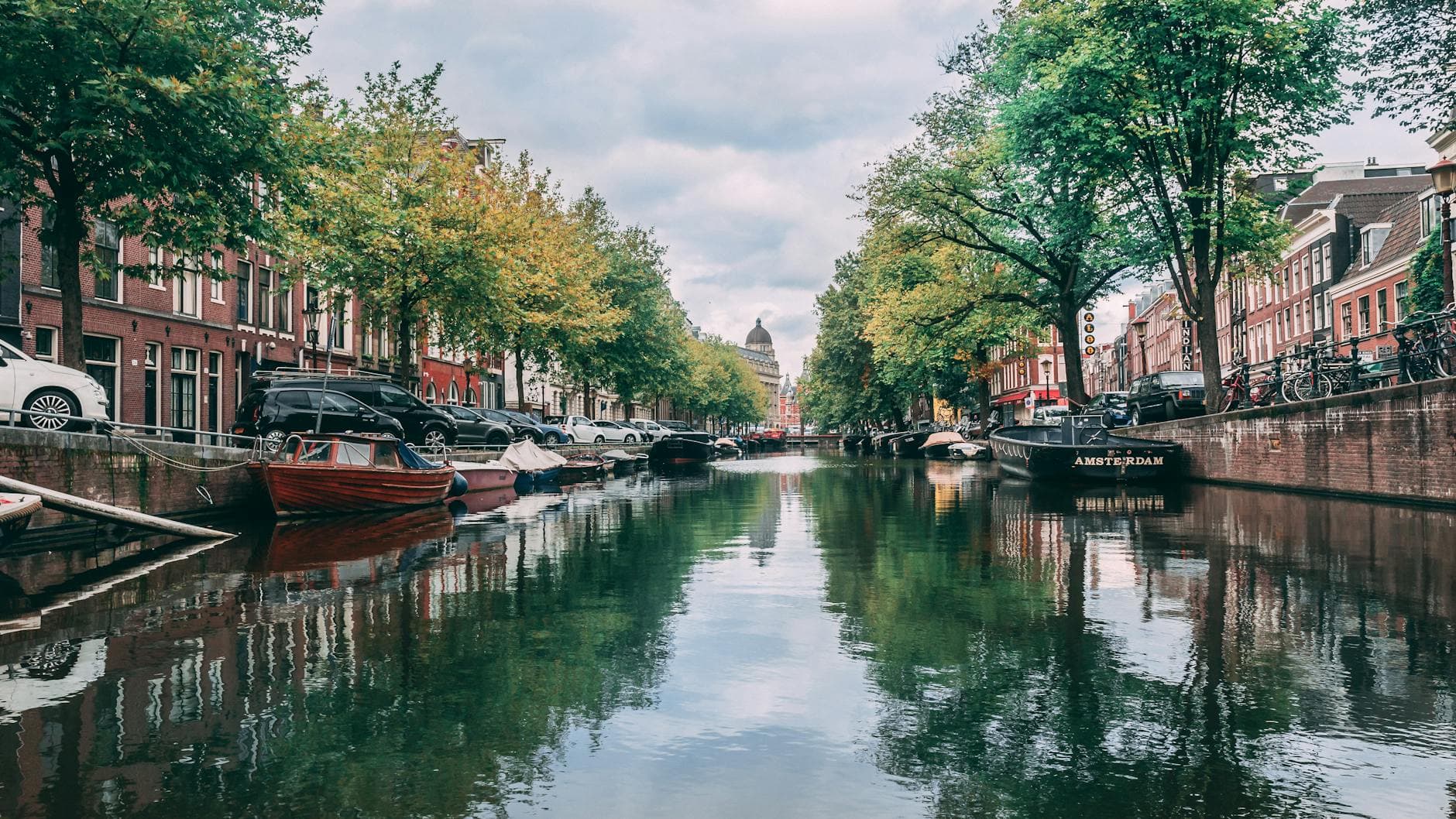
Iceland holds the #1 safest country in the world for the 18th year in a row. The United States, in the same 2026 Global Peace Index released this month, sits at #132, between Cambodia and Tanzania. That gap, more than any single year's headlines, explains why a record 180,000+ Americans moved abroad in 2025.
But the index has a problem when you actually try to use it as a relocation tool. The top 10 includes countries you cannot move to without a lottery (Iceland), countries that will tax you more than you save (Switzerland, Denmark), and countries whose visa systems aren't built for non-EU passport holders (Slovenia, Finland). The interesting question isn't "which countries are safe." It's "which safe countries are also accessible, affordable, and worth the move."
We took the 2026 GPI top 20 and ran it through three filters: visa accessibility for Americans/Brits, monthly cost of living for a single adult, and healthcare quality. The matrix at the bottom of this article is the most useful answer we know how to produce.
What the Global Peace Index actually measures
The Institute for Economics and Peace publishes the Global Peace Index annually. It covers 163 countries, about 99.7% of the world's population, and aggregates 23 indicators across three domains:
- Societal safety and security (homicide, incarceration, violent crime, perceived criminality)
- Ongoing domestic and international conflict (deaths from internal/external conflict, relations with neighbours)
- Militarisation (military expenditure as % of GDP, armed forces personnel per 100,000, weapons exports)
That last domain is what surprises most Americans. The US scores poorly not because its crime rate is the worst. It isn't, by a long shot. The reason is that the GPI weights militarisation and external conflict heavily. A country can have low street crime and still rank in the 130s if it spends 3.4% of GDP on its military and has armed forces stationed in 80+ countries.
The 2026 top 10, with one column the source doesn't include
| GPI Rank | Country | Visa accessibility for US/UK | Single-adult cost of living |
|---|---|---|---|
| 1 | Iceland | Very low (no general work permit for non-EEA) | $2,800–$3,500/mo |
| 2 | Ireland | Moderate (Stamp 4, Critical Skills, Irish ancestry) | $2,400–$3,200/mo |
| 3 | New Zealand | Moderate (Skilled Migrant, Working Holiday <30) | $2,800–$3,800/mo |
| 4 | Austria | Moderate (Red-White-Red Card, Self-Employment) | $1,900–$2,600/mo |
| 5 | Switzerland | Very low (heavy quotas for non-EU) | $4,500–$6,500/mo |
| 6 | Singapore | Low (EP requires S$5,600/mo salary minimum) | $3,200–$4,800/mo |
| 7 | Portugal | High (D7, D8 Digital Nomad, recent law changes) | $1,400–$2,000/mo |
| 8 | Denmark | Low (Pay Limit Scheme requires DKK 528K/yr salary) | $2,800–$3,800/mo |
| 9 | Slovenia | Moderate (Self-Employment, EU Blue Card) | $1,400–$1,900/mo |
| 10 | Finland | Moderate (Specialist, Startup Permit) | $2,200–$2,900/mo |
The two countries in bold, Portugal and Slovenia, are the realistic safety-affordability frontier. Everything ranked above them is either too restrictive on immigration or too expensive to be worth the move for most expats.
Try our Country Match Quiz. 10 questions, returns your top-3 country matches from these top-10 filtered by your nationality, income, and lifestyle.
Three things that changed in the 2026 update
Finland is back in the top 10, at #10. It dropped out briefly in 2024 on Northern European tension scores. The rebound is mostly explained by improvements in the "Safety and Security" sub-index. Finland now ranks third globally on that domain alone, behind only Iceland and Singapore.
Portugal held #7 despite the May 2026 citizenship law change. The change (Lei Orgânica 1/2026, in force May 19) extended naturalisation from 5 to 10 years for most pathways. That's a long-term political instability signal that the GPI didn't penalise this year, but it's something we'd watch for the 2027 index. See our companion piece, Ireland Is Now the Fastest EU Passport for Americans, for the analysis of what shifted after Portugal's change.
Slovenia keeps quietly rising. Now at #9, it's the cheapest top-10 country in Europe and the only one in Central Europe. English fluency is high among the under-40s, the EU passport is real, and rental markets in Ljubljana and Maribor still let a single expat live well at $1,400/mo. If Portugal becomes saturated this is where mid-budget Americans will go next.
The bottom of the index
The least peaceful countries in 2026, in order, are: Afghanistan (#163, fifth year in a row), Yemen, Syria, Russia, South Sudan, the Democratic Republic of Congo, Somalia, Sudan, Iraq, and Mali. Nine of the bottom 10 are countries with active or recently active armed conflict. Russia's continued presence in the bottom five is driven entirely by the ongoing Ukraine war and the sanctions regime, not by internal security collapse.
Where the United States actually ranks
The US sat at #132 in the 2026 index, down from #129 in 2025. Its closest peers on the global ranking are Tanzania (#131) and Cambodia (#133). The score is dragged down by three things:
- Homicide rate. 6.4 per 100,000, roughly five times the rate in most Western European countries.
- Incarceration. 5.7 prisoners per 1,000, the highest of any high-income country.
- Militarisation. A combination of military expenditure (3.4% of GDP) and global force projection. This is the indicator most Americans don't realise they're being scored on.
This explains the political subtext of the GPI debate: the index doesn't measure how safe your block feels. It measures how a country fits into the global system. A retired American in Vermont may live in a safer ZIP code than central Lisbon, and Lisbon will still outrank Vermont's country.
How to actually use this data when planning a move
The GPI is a starting filter, not a destination picker. The workflow that works:
- Take the top 20 as your shortlist. Below that, you're trading non-trivial safety risk for marginal cost savings.
- Filter by visa, not by hope. Iceland and Switzerland feel romantic until you read the eligibility criteria. Use our Visa Finder to filter by your passport.
- Cross-check with city-level safety, not country. Mexico ranks low overall but Mérida and San Miguel de Allende are among the safest mid-sized cities in the Americas. Country safety hides huge variance.
- Check "Positive Peace" indicators. The GPI also publishes a Positive Peace Index: government effectiveness, free press, corruption, and social cohesion. These predict long-term stability better than this year's crime stats.
- Run the cost calculator for the shortlist. A safe country you can't afford is not a relocation. Our Cost of Living Calculator lets you compare your current city against any of the GPI top 20.
What this index doesn't tell you
Three real limitations to keep in mind before treating the GPI as gospel:
- Petty crime and tourist scams don't show up. The GPI catches structural violence, not pickpockets. Lisbon and Barcelona rank high on safety; both have meaningful petty-theft problems for visible tourists.
- Natural disaster exposure is excluded. Iceland is peaceful but seismically active; New Zealand and Japan are both in earthquake zones.
- Healthcare access isn't in the score. A peaceful country with poor healthcare can still be risky, especially for retirees. See our companion piece: The 5 Countries Where American Retirees Actually Get the Best Healthcare in 2026.
The one-line takeaway
If you want to move somewhere both safe and accessible, the realistic answer in 2026 is Portugal first, Slovenia second, Ireland third, depending on your passport, budget, and how much rain you can tolerate.
Related on ExpatLife
- Ireland Is Now the Fastest EU Passport for Americans: the 5-year Stamp 4 route via Critical Skills, Startup, spouse, or ancestry.
- The 5 Countries Where American Retirees Actually Get the Best Healthcare in 2026: Portugal, Malaysia, Panama, Costa Rica, and Spain, ranked by real access rather than marketing.
- Europe vs America Cost of Living 2026: includes the salary-adjusted break-even, at what US income does Europe stop winning?
- Record Numbers of Americans Are Leaving the U.S. in 2026: 180K+ Americans relocated in 2025, plus the 6-profile destination matrix for who fits which country.
Data source: Institute for Economics and Peace, Global Peace Index 2026. Country rankings updated to reflect the May 2026 release. We do not redistribute the underlying scores; for the full 163-country list and methodology, see the IEP report.
Personal Relocation Assessment
This article is general. Your situation is not.
Tell us your nationality, income and timeline and we research it by hand: where you actually qualify, the route, the current threshold with the law it comes from, and what usually goes wrong in a position like yours. Written by an expert, in 3 working days.
Enjoyed this article?
Subscribe for more expat tips and guides.
Which country is right for you?
Answer 6 quick questions about your budget, lifestyle, and priorities. Our AI ranks 122 countries and builds a personalised relocation plan.
Enjoyed this article? Share it with fellow expats


