Western Europe
Central & Eastern Europe
Asia & Middle East
Americas
Oceania & Africa
Expat Topics
🇪🇪 The expat guide · 2026
Estonia.
Europe's most digital nation - e-Residency, a flat 22% tax, and a world-class nomad visa
Global Peace Index
#24
2026 GPI (score 1.559) - Baltic NATO
Security Tax Repealed
Jul 2025
Planned 2026 security tax on corp profits + individual income removed
Minimum Wage
€946/mo
Gross, from 1 Apr 2026 (was €886 since Jan 2026; tripartite agreement)
1-BR Rent (Tallinn Centre)
€600–€850/mo
City centre avg ~€600; up to €850 for furnished/central (2026)
Income Tax Rate
22% flat
24% hike CANCELLED by Riigikogu Dec 2025; €700/mo allowance
VAT
24%
Raised from 22% on 1 Jul 2025 (permanent - defense financing)
Verified August 13, 2026
See 5 more figuresCan you actually move to Estonia?
We research your nationality, income and timeline against Estonia's current rules, and tell you whether you qualify and what it actually costs.

Why move to Estonia?
Estonia has built one of the world's most advanced digital societies from scratch: 99% of government services run online, prescriptions are fully digital, and the country launched e-Residency - letting anyone on Earth register and manage an EU company remotely. The personal income tax stays at 22% flat in 2026 (a planned 24% hike was scrapped by the Riigikogu in December 2025), but VAT rose permanently from 22% to 24% on 1 Jul 2025 to finance defense spending, and a 2% surcharge now applies to certain e-resident company board fees from Jan 2026. From 1 Jan 2026, the 'tax hump' is gone - every resident gets a flat €700/month tax-free allowance regardless of income. The national minimum wage steps up from €886/mo to €946/mo on 1 April 2026 under the tripartite social agreement. PR applicants now need A2 Estonian + the adaptation programme. With zero corporate tax on retained profits, full Schengen and EU membership, and a Digital Nomad Visa at €4,500/month gross (2026 quota capped at 1,292 slots), Estonia punches far above its 1.4M population. Tallinn's medieval Old Town, creative Kalamaja, and booming tech scene sit alongside Tartu's university energy - all at costs still 40-45% below Berlin (Tallinn 1BR centre averages ~€600/mo, up to €850 furnished).
The rest of the Estonia numbers
The figures that did not fit in the summary above.
| Figure | Detail |
|---|---|
| Corporate Tax0% retained | Tax only on distributed profit |
| DN Visa Income€4,500/mo gross | 6-month avg; 2026 immigration QUOTA capped at 1,292 slots |
| PR LanguageA2 Estonian | Plus adaptation programme, from 1 Jan 2026 |
| Employer Social Tax33.8% total | 33% social + 0.8% unemployment; min base €886/mo → min employer social tax €292.38/mo |
| Employee Contribution1.6% (lowest in EU) | Unemployment insurance only; no additional employee social contributions |
The Estonia basics
10 essentials every expat should know - from the practical to the political.
Is Estonia actually your best option?
This page tells you what Estonia is like. It cannot tell you whether it beats the four other countries you should be looking at, because that answer changes with your passport. Income thresholds, tax treaties and citizenship timelines are all nationality specific, and the general rule is often not the rule that applies to you.
A Personal Relocation Assessment answers it for your case. You tell us your nationality, income, household and timeline, and we our expert researches it against the law as it stands: which countries you actually qualify for, the route, the current threshold with the instrument it comes from, and what is most likely to go wrong in a position like yours.

Food culture
Black rye bread, kama, herring, Old Town medieval taverns, new-Nordic Tartu bistros - Estonia's quietly inventive table
Explore

Festivals & traditions
Sauna ritual, Song Festival (300,000 singers), e-Residency, Skype heritage, Tartu Capital of Culture 2024 - Estonia's outsized cultural footprint
Explore

Coast & nature
Saaremaa cliffs, Pärnu beach, 2,222 islands, Baltic archipelago, Lahemaa bog walks - Estonia's wild coastline
Explore

Heritage & landmarks
Toompea Castle, Alexander Nevsky Cathedral, Town Hall Square, Kadriorg Palace, Tartu University - Estonia's medieval-to-modern icons
Explore
8 reasons people stay longer than they planned
The pull of Estonia isn't one big thing - it's a stack of small ones, each compounding the others.
World's Most Digital Country
Estonia was the first country to offer online voting, digital prescriptions, and e-Residency - 99% of government services run online 24/7. You can register a company, file taxes, and sign legal documents from anywhere on Earth in under an hour.
0% Corporate Tax on Reinvested Profits
Estonian companies pay no corporate income tax on profits kept in the business - tax is only triggered upon distribution. This makes Estonia one of the world's most attractive EU jurisdictions for startups, freelancers, and e-residents building global businesses.
Pioneer Digital Nomad Visa
Estonia launched one of the world's first digital nomad visas in 2020, granting up to 12 months of legal stay to remote workers earning €4,500/month. Combine it with e-Residency to both live legally in Estonia and run a tax-efficient EU company simultaneously.
5G Everywhere, Always On
Estonia has some of the fastest and most ubiquitous internet in Europe - 5G coverage is near-total nationwide, free public WiFi covers most of Tallinn, and registered city residents get free public transport. For digital workers, connectivity is never a concern.
Digitised, Quality Healthcare
Estonia ranks #10 in Europe for healthcare quality (Numbeo 2025). The system is entirely paperless - over 99% of prescriptions are issued digitally - and the public Estonian Health Insurance Fund covers all legal residents. Private clinic consultations cost just €30–€60.
Medieval City Meets Tech Hub
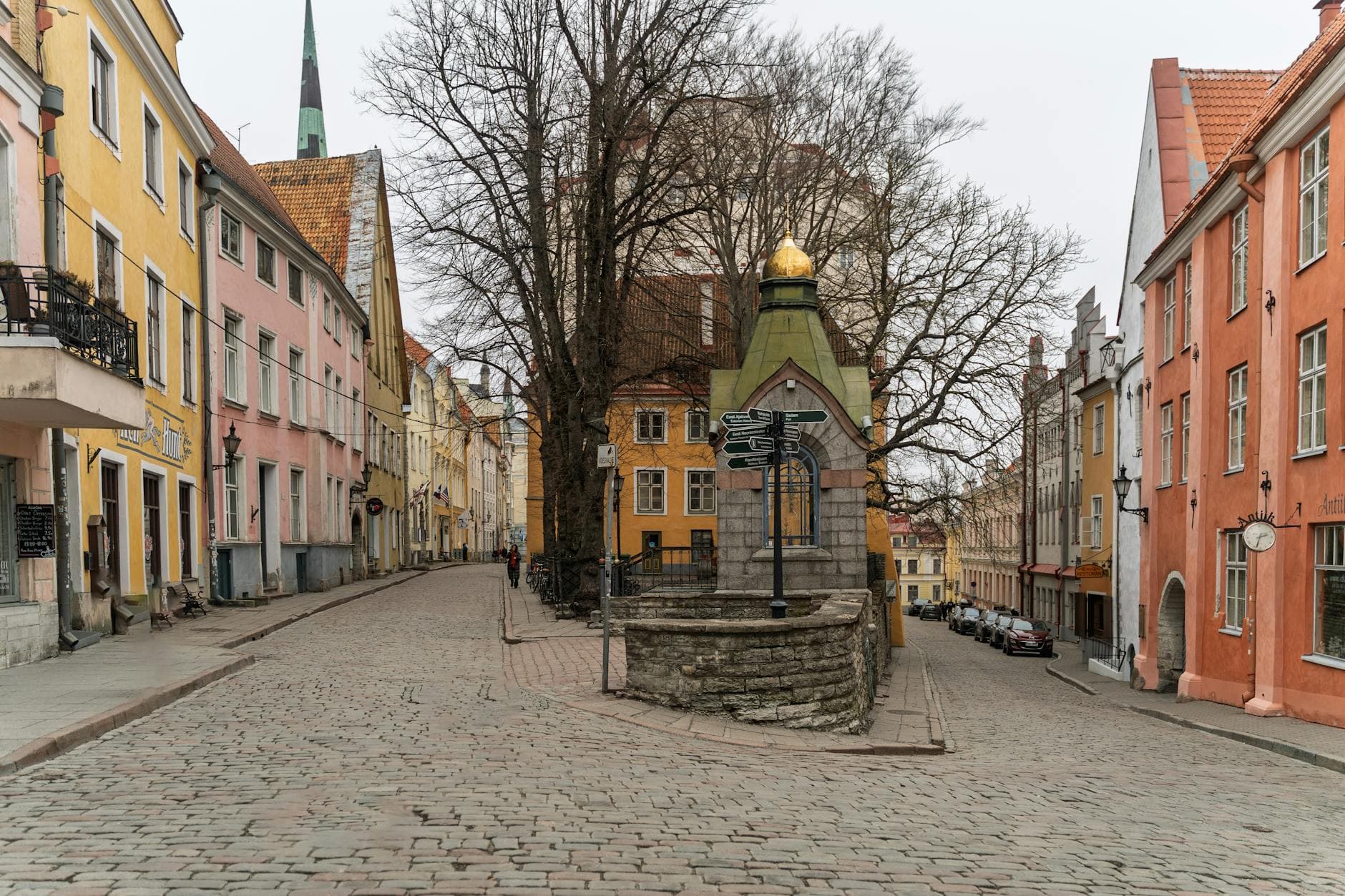
Tallinn's UNESCO-listed Old Town - one of Europe's best-preserved medieval cities - sits minutes from a thriving startup scene that has produced unicorns like Skype, TransferWise (now Wise), and Pipedrive. The contrast makes daily life genuinely unique.
Affordable Compared to Western Europe
Rent in Tallinn runs 47% below Berlin and 40% below Amsterdam. A comfortable single-person life in Tallinn costs €1,600–€2,000/month. Tartu, the university city, is 15–20% cheaper still - excellent value for a fully EU, Schengen-zone base.
Schengen Gateway to Europe
Estonia's EU and Schengen membership means visa-free travel across 26 European countries. Tallinn Airport serves 40+ destinations, with Riga and Helsinki a short hop away for even broader connectivity to Asia and North America.
2 cities, 2 different lives
Pick the rhythm that fits - capital buzz, beach mornings, or a slow-living escape.

Tallinn
Medieval walls, unicorn startups, and the most wired city in Europe
€1,600–€2,100 /mo
Tech founders, digital nomads, e-residents

Tartu
Estonia's intellectual soul - a university city with startup energy and affordable rents
€1,200–€1,600 /mo
Academics, researchers, budget-conscious nomads
Everything, in plain words
Visa rules, healthcare, schools, taxes - written like a friend would explain it, not like a brochure.
Visa & Residency
Estonia offers one of Europe's most innovative visa portfolios, anchored by the world's first Digital Nomad Visa (2020) and the globally unique e-Residency programme. EU/EEA citizens need no visa to live and work indefinitely. Non-EU nationals can choose between the Digital Nomad Visa (12 months, €4,500/mo gross income), temporary residence permits for employment or enterprise, or the long-term EU resident permit after 5 years. **2026 immigration quota: 1,292 non-EU workers** with stricter employer verification. **Major PR rule change from 1 Jan 2026**: applicants for a temporary residence permit for permanent residence must now complete the mandatory adaptation programme AND pass an A2 Estonian language exam (organised by the Ministry of Education). Applications submitted before 1 Jan 2026 are grandfathered. Citizenship still requires 8 years legal residence (5 on PR) + B1 Estonian + civics knowledge; dual citizenship limited to Estonian-heritage applicants.
Read 🏥Healthcare
Estonia ranks 10th in Europe for healthcare quality (Numbeo 2025) and operates one of the continent's most digitised health systems - over 99% of prescriptions are issued digitally, and patients can access all their medical records via the national Terviseportaal (health portal). The public Estonian Health Insurance Fund (EHIF/Haigekassa) covers all legally employed residents through a 13% employer payroll tax. Expats not immediately eligible for EHIF can pay voluntary premiums of €170/month. Private clinics offer fast specialist access for €30–€60 per visit.
Read 💰Cost of Living
Estonia's tax system is built for simplicity and digital efficiency: a flat 22% personal income tax (planned 24% hike scrapped Dec 2025), zero corporate tax on retained profits, and a flat €700/month (€8,400/year) tax-free allowance for ALL residents from 1 Jan 2026 - the old 'tax hump' (allowance taper above €14,400) is gone. **VAT raised from 22% to 24% on 1 Jul 2025**. From 1 Jan 2026, a **2% additional PIT** applies to specific salary and board-member fees paid by e-resident companies (designed to deter pure-pass-through structures). Social contributions are low - employees pay just 1.6% unemployment insurance. Banking is fully digital, and the country ranks among Europe's cheapest for international money transfers thanks to fintech innovation pioneered by Wise (formerly TransferWise), founded in Tallinn.
Read 🏠Housing
Estonia's rental market is competitive, especially in Tallinn, where prices have risen 11%+ annually and fewer new apartments are being built. Tallinn 1-bedroom apartments in the city centre average €700–€1,100/month; Tartu runs €450–€750. The Old Town, Kalamaja, and Kadriorg neighbourhoods command premiums. Key rental platforms are KV.ee and City24.ee. Utilities are never included in rent - always request winter utility bills to budget accurately, as heating can add €80–€150/month in cold months. The rental market moves quickly, and having an Estonian ID number or DNV visa significantly simplifies signing leases.
Read 💼Work & Business
Estonia has built one of Europe's most business-friendly environments: online company registration in under an hour, a 0% corporate tax on retained profits, and a growing startup ecosystem that has produced Skype, Wise, Bolt, and Pipedrive. EU citizens can work freely without any permit. Non-EU nationals need either the Digital Nomad Visa (for remote work with non-Estonian employers), a residence permit for employment, or a residence permit for enterprise (self-employed/founders). The 2026 immigration quota is 1,292 non-EU workers, and new employer verification requirements mean sponsoring companies must prove 6+ months of prior economic activity.
Read 🌆Daily Life
Daily life in Estonia combines medieval charm with bleeding-edge digital infrastructure: free public transport in Tallinn for registered residents, 5G internet everywhere, 99% digital government services, and a compact, walkable capital where the Old Town is UNESCO-listed. The country is safe (#24 globally, 2025 Peace Index), the food scene is seasonal and excellent, and English is widely spoken in cities. Winters are cold (January average -4°C, with extremes to -20°C) and dark - only 6 hours of daylight in December. Summers compensate spectacularly, with 18+ hours of light and a jubilant outdoor culture that feels like a collective exhale after a long, dark year.
Read ✈️Moving Guide
Moving to Estonia is one of the more straightforward EU relocations, especially for digital workers - e-government means most registrations happen online, and Estonia's digital-first approach removes much of the in-person bureaucracy common elsewhere. The essentials: secure housing before arrival (market moves fast), apply for a Digital Nomad Visa or residence permit in advance, get an Estonian ID number (isikukood) as your first in-country task, then register with the Population Register, enrol in the health system, and open a bank account. For tech workers and startup founders, Estonia's systems are exceptionally well-designed for smooth onboarding.
Read 📚Education
Estonia's public education system is consistently ranked among the best in Europe - the country places in the top 5 in Europe on PISA tests and produces more STEM graduates per capita than most EU countries. Education is free for all residents from pre-school to university. The University of Tartu (founded 1632) and Tallinn University of Technology (TalTech) both offer significant English-language programmes and attract international students. International schools in Tallinn cater to expat families seeking IB programmes or curricula from their home countries.
Read 🌅Lifestyle
Estonia offers one of Europe's most distinctive lifestyle propositions: an ancient culture - singing festivals, rye bread traditions, saunas and bog trails - filtered through a 21st-century digital lens. The country is small enough to know well (the entire nation has the population of a medium-sized European city), safe, and spectacularly seasonal. Summers bring 18+ hours of light, white nights, outdoor festivals, and a Baltic coast within an hour of Tallinn. Winters are dark and cold but create a uniquely cosy, introspective culture. Nature is always close - 50% of Estonia is forest - and the concept of 'looduse rahu' (peace of nature) is genuinely lived.
Read 📈Investing
Everything expats need to know about investing in Estonia - from property and stocks to tax-efficient strategies, brokerage access, and building wealth abroad.
ReadTools to plan your move to Estonia
Practical tools to turn an idea into a real plan - pick a season, time your visa, build a budget, even live a day before you go.
Best time to move to Estonia
Season-by-season - weather, visa timing, rental markets, and expert tips
Tallinn cost of living
Full monthly budget breakdown - rent, food, transport, utilities
Country match quiz
Eight quick questions, AI-matched country shortlist for your lifestyle
Visa finder
Search visa options by nationality, budget, and stay length
A day in Estonia
Live a perfect day with AI - real cafés, costs, and routes
Relocation plan
Step-by-step AI moving timeline tailored to your situation
Estonia vs the rest
See how Estonia stacks up against other popular expat destinations.
Where Estonia ranks
See where Estonia sits in our independent expat rankings - cost, safety, healthcare, and more.
Cheapest Countries for Expats
Ranked list of the most affordable countries for expats in 2026. Monthly budget, cost of living, internet speed, and city guides for each destination.
Countries Under $1,500/Month Cost of Living
Complete list of countries where a single expat can live comfortably on under $1,500 per month. Budget breakdowns, internet speeds, and city guides included.
Countries Where $2,000/Month Is Enough
All countries where a single expat can live well on $2,000 per month or less. Ranked by cost of living with budget details, internet, and English proficiency.
Best Countries for Remote Workers
Top countries for remote workers ranked by internet speed, cost of living, and English proficiency. Find your ideal work-from-anywhere destination in 2026.
Countries With the Fastest Internet
Ranked list of countries with the fastest broadband internet speeds for expats. Average Mbps, cost of living, and city guides for each destination.
Best Countries for Retirement Abroad
Warm-climate countries where one person can live on $2,500/month, ranked safest first by Global Peace Index. Portugal leads, then Malaysia and the Maldives. 2026.
Honest answers
The questions everyone asks before they pack a single box.
How much does it cost to live in Estonia as an expat?
What visa do I need to move to Estonia?
What is healthcare like in Estonia for expats?
What are the best cities to live in Estonia as an expat?
Is Estonia a good place to live as an expat in 2026?
Personal Relocation Assessment
Can you actually move to Estonia?
This page is general. Your case is not. Our relocation expert researches your nationality, income and timeline against the law as it stands, names the instrument behind every figure, and tells you where you actually qualify.
Get my assessmentExpat Insights, weekly
Visa updates, cost-of-living shifts, and real expat stories from Estonia - straight to your inbox.
Which country is right for you?
Answer 6 quick questions about your budget, lifestyle, and priorities. Our AI ranks 122 countries and builds a personalised relocation plan.