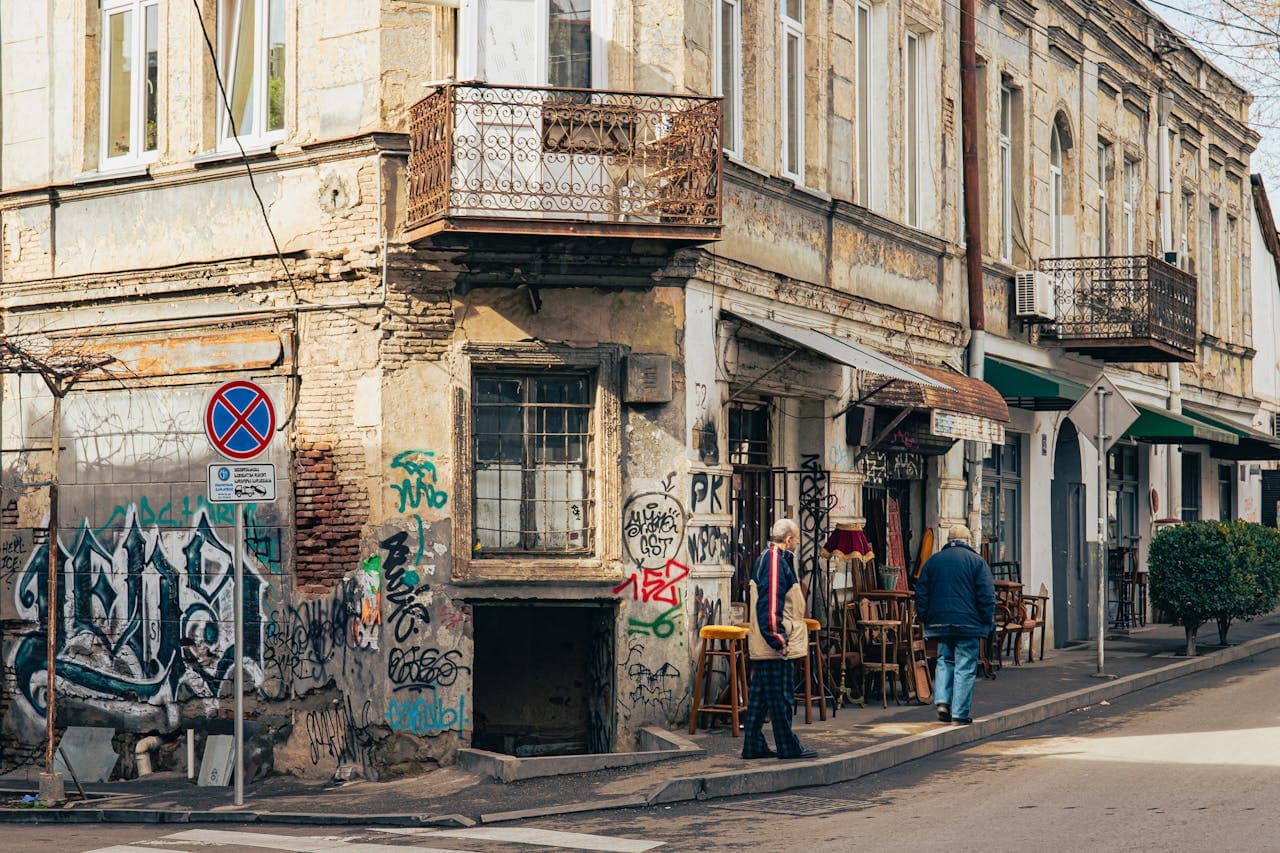
Most articles about Tbilisi tell you what it costs. Almost none tell you what a day actually feels like — the rhythm of it, the small frictions, the moments that make expats stay for years.
This is the honest version: an ordinary Tuesday in Tbilisi as an expat in 2026, from morning coffee to evening supra, with the real numbers and the real texture of life in Georgia's capital.
Key Takeaways
- A comfortable expat day in Tbilisi runs $35-$55 all-in (food, transport, coffee, a meal out) — moderate monthly lifestyle ~$1,050, comfortable ~$1,628.
- The day revolves around cafés. Tbilisi has one of the densest specialty café scenes in the region, mostly concentrated in Vera and Vake.
- Rent reality (2026): $300-$400 for a decent 1BR in Saburtalo/Gldani; $400-$700 in central Vera/Vake. Expats pay a 10-30% premium over locals.
- Georgia gives 1-year visa-free stays to citizens of 90+ countries — the single biggest reason nomads pick Tbilisi.
- The food is the daily anchor — khachapuri, khinkali, fresh produce, and supras (feasts) define the social rhythm.
- Pace is slow, social, and unstructured. This is the appeal and, for some, the frustration.
- Best neighborhoods for daily expat life: Vera (nomad epicenter), Vake (upscale, leafy), Sololaki (historic charm), Saburtalo (cheaper, local).
8:00 AM — Morning, and the first decision of the day
You wake up in a Soviet-era apartment in Vera — high ceilings, a tiny balcony, radiators that worked unpredictably all winter but it's May now so it doesn't matter. Rent: around $550/month for this 1-bedroom, which felt expensive when you arrived and feels normal now.
The first decision every Tbilisi day: which café. Vera alone has dozens within a 10-minute walk. You settle on the usual — a specialty spot where a flat white costs 5-7 GEL ($1.80-$2.50) and the barista knows you don't want sugar.
The café is half-full of laptops at 8:30 AM. The crowd is the Tbilisi expat mix of 2026: a few Americans, some Russians and Ukrainians who arrived after 2022 and never left, a couple of Germans, an Indian software engineer, two British retirees. Almost nobody is Georgian — which is both the convenience and the quiet problem of café-centric expat life here.
Morning so far: Coffee 6 GEL (~$2.20).
10:00 AM — Work, and the internet question
Back to the apartment or a coworking space. Tbilisi's internet is genuinely good — 90-150 Mbps fiber is standard in central neighborhoods, and the cafés have reliable Wi-Fi. The bigger issue is the time zone: UTC+4 means a 8-hour gap to US East Coast. If you work with American clients, your afternoons-into-evenings are their mornings.
Most expats here either:
- Work European hours (only 2-3 hours offset — very manageable)
- Work async
- Accept evening calls with the US
Coworking, if you use it, runs $100-$150/month. Many nomads just rotate cafés — at $2 a coffee, a "café day" costs less than a coworking desk and you get variety.
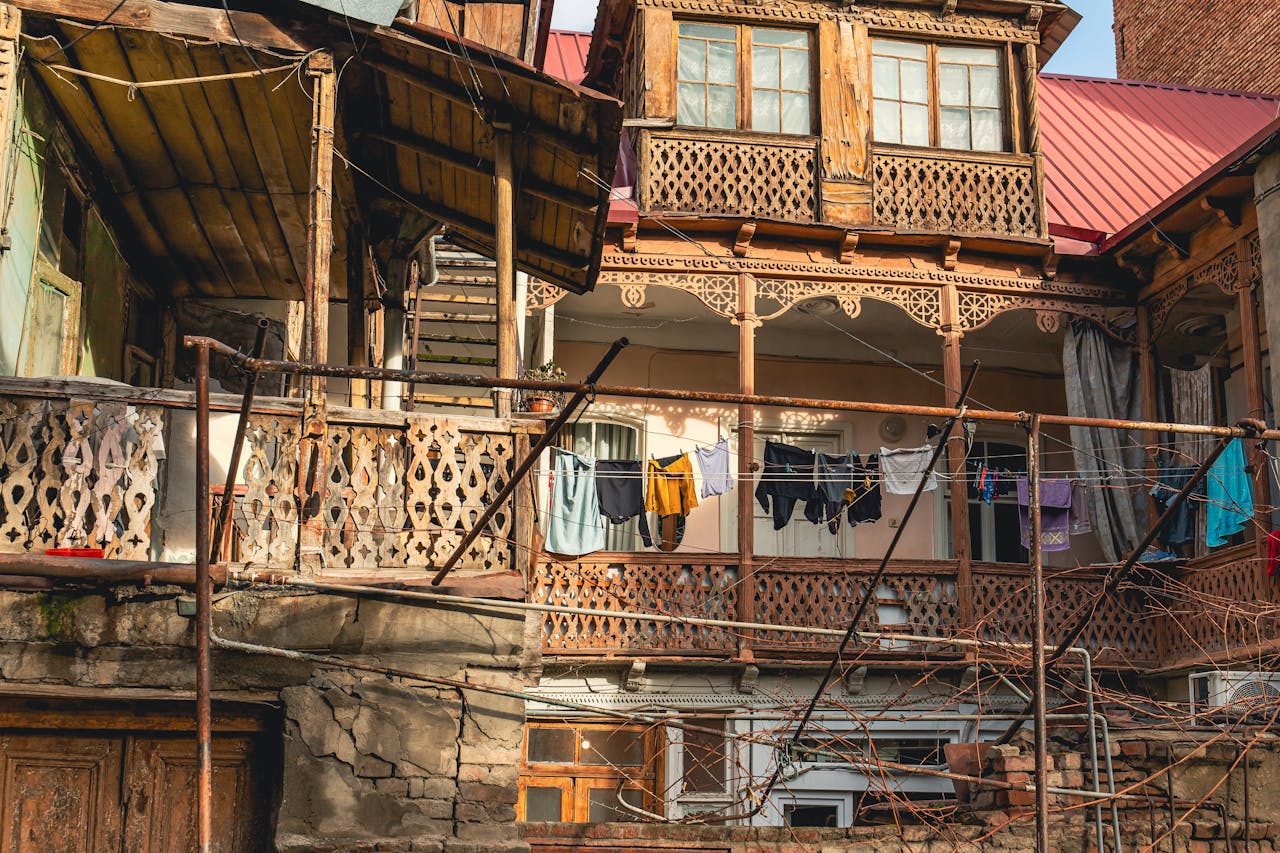 Vera's café-lined streets are the daily office for most Tbilisi nomads — fast Wi-Fi, $2 coffee, and a rotating cast of the city's international community.
1:00 PM — Lunch, and the khachapuri problem
Lunch is where Georgia quietly wins your heart. A proper sit-down Georgian meal — say, a bowl of soup, a plate of khinkali (soup dumplings), fresh bread, a salad — runs $3-$8 per person at a local spot. At a nicer restaurant catering to the expat crowd, maybe $10-$15.
The "khachapuri problem" is real: Georgian cheese bread is so good, and so available, and so cheap (3-6 GEL, ~$1-$2.20) that most expats gain weight in their first three months. The Adjarian version — a boat of bread with cheese, butter, and a runny egg — is a meal in itself.
You can also self-cater extremely cheaply. The local markets (Dezerter Bazaar is the famous one) sell produce at prices that feel unreal: tomatoes and peppers at $0.50-$2/kg, eggs $1-$2/dozen, bread under $0.50 a loaf.
Lunch: Georgian meal out, ~$6.
3:00 PM — Errands, and the friction of bureaucracy
Afternoon errands reveal Tbilisi's two faces.
The easy face: Georgian banking is famously expat-friendly. Opening an account at Bank of Georgia or TBC takes a day with just a passport. The "1% tax" Small Business Status (1% income tax on service revenue up to ~$155K/year) makes Georgia genuinely tax-attractive — though you need a local accountant to set it up properly.
The friction face: Marshrutkas (Soviet-era minibuses) still run many routes, and they're cheap (under $0.50) but chaotic — no clear schedule, you flag them down, you shout when you want off. The metro is clean and simple (a flat ~$0.20 per ride) but only covers two lines. Bolt (the Uber equivalent) is cheap and what most expats default to — a cross-town ride is $2-$4.
Pharmacies, groceries, SIM cards — all easy and cheap. Anything involving a government office — visa registration, vehicle paperwork — involves more patience and usually a Georgian friend or a paid fixer.
5:00 PM — The walk, and why people stay
Late afternoon is when Tbilisi shows off. The light hits the Old Town's wooden balconies, the funicular climbs Mtatsminda, and you walk — because Tbilisi is genuinely walkable in the center, and walking is free.
This is the part that doesn't show up in cost-of-living spreadsheets: Tbilisi is beautiful in a lived-in, slightly crumbling, deeply atmospheric way. Sulfur baths in the Abanotubani district. Churches on hills. Vineyards a 90-minute drive away. The Caucasus mountains visible on clear days.
The expats who stay for years usually cite this — not the cost, not the visa, but the texture of the place.
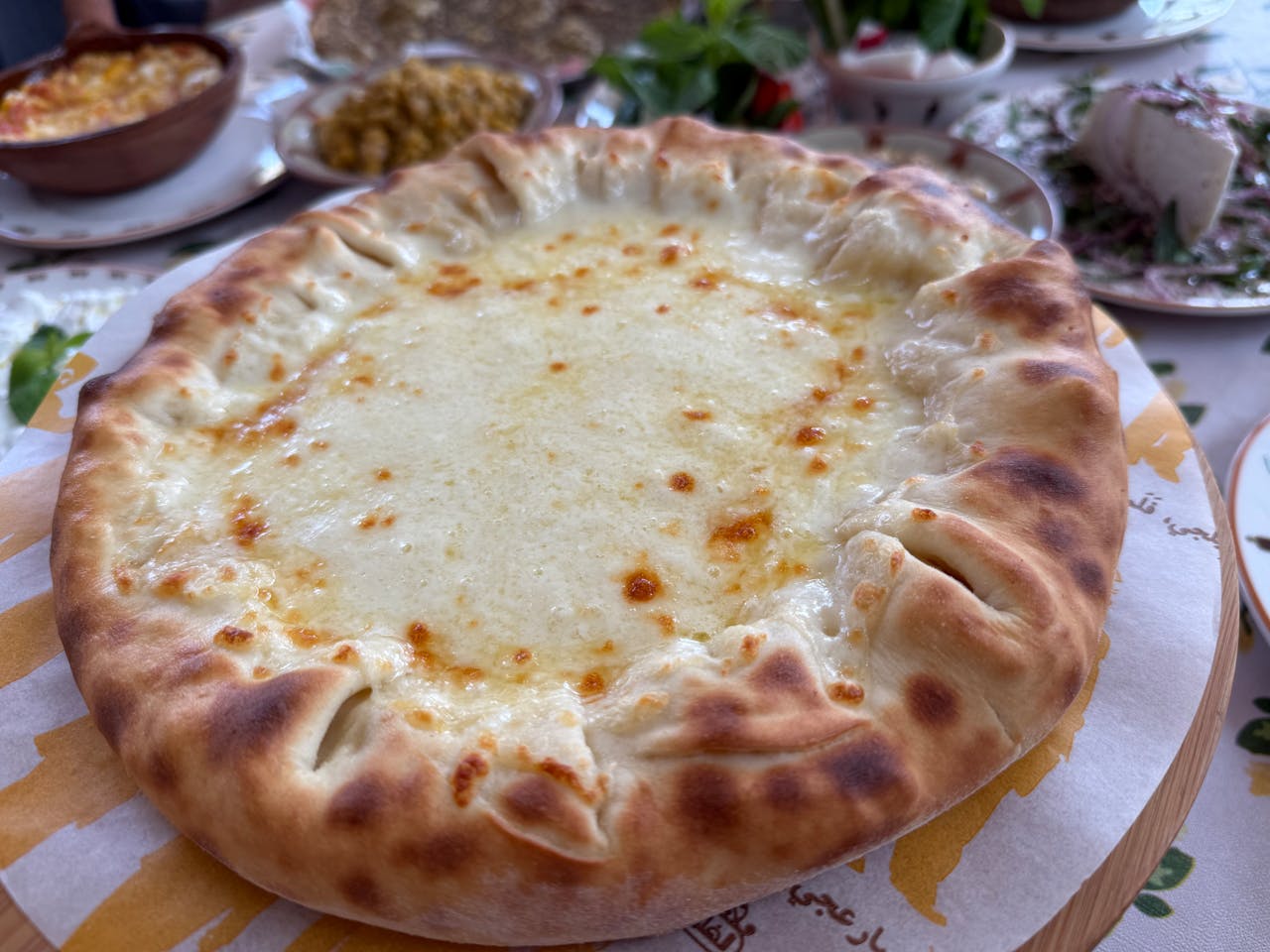 The Adjarian khachapuri — bread, cheese, butter, egg. A $2 lunch that defines the Tbilisi food experience.
8:00 PM — Dinner, the supra, and Georgian social life
Evening is where Georgia's social culture either pulls you in or leaves you out.
The supra — the traditional Georgian feast — is the heart of social life. Long tables, endless food, a tamada (toastmaster) leading structured toasts, and a lot of wine (Georgia claims 8,000 years of winemaking and the homemade stuff flows freely). If you get invited to a Georgian supra, go. It's the fastest way to actually understand the country.
The honest catch: most expats don't get invited to many supras. Georgian social life is warm but family-and-old-friends-centric. The expat evening usually looks different:
- Dinner with other expats ($10-$20/person at a mid-range restaurant)
- Wine bars in Vera or the Fabrika complex (a converted Soviet sewing factory, now the nomad social hub)
- Quiet nights in — Tbilisi is cheap enough that you're not pressured to go out constantly
Dinner: Restaurant with friends, ~$15 including wine.
The honest daily-cost breakdown
A typical comfortable expat day in Tbilisi (2026):
| Item | Cost |
|---|---|
| Morning coffee | $2.20 |
| Lunch (Georgian meal out) | $6 |
| Afternoon coffee / snack | $3 |
| Transport (2-3 Bolt rides) | $6-$10 |
| Dinner out with wine | $15 |
| Misc (water, small shopping) | $5 |
| Daily total | $37-$41 |
Add rent (averaged daily: ~$15-$20) and you're at $52-$61/day all-in for a comfortable lifestyle. Live more locally — cook at home, use the metro, skip the daily restaurant — and you can run a perfectly good Tbilisi day for $20-$30 plus rent.
The monthly picture
| Lifestyle | Monthly cost |
|---|---|
| Lean (local neighborhood, cook often, metro) | $850-$1,050 |
| Moderate (decent 1BR, mixed eating, some travel) | $1,050-$1,400 |
| Comfortable (central rent, regular dining out, weekend trips) | $1,500-$1,900 |
For a couple, add roughly 50-60% (shared rent, same transport).
What a Tbilisi day teaches you about living here
After enough ordinary Tuesdays, expats tend to converge on the same observations:
1. The café culture is the social infrastructure. You don't "make plans" in Tbilisi so much as you exist in cafés and run into people. If you're someone who needs structured socializing, this can feel isolating at first.
2. The Georgian-expat divide is real. You can live a full, happy life in Tbilisi entirely within the international bubble — and many do. Breaking into Georgian friendships requires learning some Georgian (a genuinely hard language) and showing up consistently.
3. The 1-year visa-free entry removes all stress. No visa runs, no paperwork anxiety. You can simply be here. This single fact is why Tbilisi punches above its weight as a nomad base.
4. The cost is low but rising. The 2022-2023 influx (especially Russians and Ukrainians) pushed central rents up 30-50%. Vera and Vake aren't "cheap" anymore — they're "reasonable." The genuine bargains are in Saburtalo and the local neighborhoods.
5. Winter is the test. Tbilisi summers are hot and social. Winters are gray, can be cold, and air quality dips because of heating. Many nomads leave December-February. If you can love Tbilisi in January, you'll love it year-round.
6. The food never gets old. Three months in, you've stopped being amazed by $2 khachapuri. Three years in, expats interviewed for this piece still rank Georgian food as a top reason they stayed.
Is the Tbilisi daily rhythm right for you?
You'll thrive here if:
- You like unstructured, café-centric days
- You value beauty + atmosphere over infrastructure perfection
- You want zero visa stress (the 1-year visa-free entry)
- You work European hours or async
- You're OK with a slower, less-organized pace
You'll struggle if:
- You need a highly structured, efficient environment
- You can't tolerate gray winters
- You want to integrate deeply with locals fast (the language barrier is real)
- You need US-time-zone overlap for work (8-hour gap)
What to do if Tbilisi is on your list
- Visit in two seasons — ideally May/June (peak Tbilisi) and January (the honest winter test).
- Stay in Vera for your first month — it's the nomad epicenter, easiest soft landing.
- Set up Wise before arriving — Georgia uses the lari (GEL), and your home bank's 3-5% currency markup adds up fast. Wise gives the real exchange rate.
- Open a Georgian bank account in week 1 — it's genuinely easy, and you'll want it for the 1% tax setup later.
- Learn 20 words of Georgian — even basic effort dramatically warms how locals treat you.
Want more on Georgia? Read our Tbilisi city guide · Georgia country guide · or compare to the neighbor: Tbilisi vs Yerevan for Digital Nomads in 2026.
Personal Relocation Assessment
This article is general. Your situation is not.
Tell us your nationality, income and timeline and we research it by hand: where you actually qualify, the route, the current threshold with the law it comes from, and what usually goes wrong in a position like yours. Written by an expert, in 3 working days.
Enjoyed this article?
Subscribe for more expat tips and guides.
Which country is right for you?
Answer 6 quick questions about your budget, lifestyle, and priorities. Our AI ranks 122 countries and builds a personalised relocation plan.
Enjoyed this article? Share it with fellow expats