
Three years ago, we landed at Lisbon Airport with four suitcases, a D7 visa in our passports, and the exact kind of naive optimism that makes you believe Instagram. "This is it," my partner said as the Uber climbed toward Graça. "We're done moving."
Last month, we left.
This is the story I wish someone had written before we signed a 5-year lease in a city we thought we'd die in.
Key Takeaways
- Lisbon in 2026 is not the Lisbon of 2021–2022. Rent has roughly doubled; the D7 wave, NHR tax regime, and tourism boom transformed the city.
- The honest reasons we left: rent (€2,100 for a 1BR in Graça), doctor waitlists, becoming "part of the problem" as foreigners, and losing the neighborhood community that drew us there.
- The city is still magical — just not for new arrivals on middle-class budgets in 2026.
- What we wish we'd done differently: picked Porto, bought property when we could, learned Portuguese seriously from month one, and made local friends outside the expat bubble.
- Where we went next: Porto. Same country, same visa, half the rent, more soul.
- Lisbon is still the right answer for some expats — retirees on €4K+/mo, Portuguese-language families, or anyone who bought before 2023. For everyone else, Porto, Braga, or Coimbra make more sense in 2026.
The dream (2022)
We arrived in September 2022. Lisbon was still cheap by Western European standards — we signed a lease on a 1-bedroom in Graça for €1,150/month. Big windows. A view of the Tejo you could see from the bathtub. A 10-minute walk to Alfama. Our neighbor downstairs, Dona Amélia, brought us bolo de arroz on our second day.
The D7 had felt like a hack. €920/month passive income requirement? Laughable for anyone with a Silicon Valley salary. We applied, got approved, and moved. The NHR tax regime meant 10% tax on foreign income for a decade — the math was irresistible.
For the first year, everything worked. We learned the word saudade and thought we understood it. We had Sunday lunches at a tasca where the owner knew our drink order by November. We bought a used bike, joined a Portuguese class, and started planning our 10-year residency path to citizenship.
Then 2023 happened.
The shift
By mid-2023, something had changed. You could feel it walking through Graça on a Tuesday morning. The neighborhood had filled with scooters you had to rent by app. The little grocery store we loved closed; a specialty coffee shop replaced it, charging €4 for a flat white. Our Portuguese class, which had been 80% Portuguese learners and 20% foreigners in 2022, was 90% foreigners by March.
The numbers:
- Our rent renewal in August 2023: €1,450 (up 26%)
- Same apartment listed for the next tenant in August 2024: €2,100
- Average Lisbon 1BR central, 2022 vs. 2026: €950 → €1,650 (+74%)
Locals had been priced out of the neighborhoods they grew up in. We watched three families on our street leave because their landlords wanted to convert to short-term rentals. The numbers were easy to justify from a spreadsheet: for them, selling or converting doubled their income.
But we were part of that pressure. We were a couple of relatively well-paid foreigners renting a converted apartment in a neighborhood our Portuguese landlord's family had lived in for four generations. The math added up. The feeling didn't.
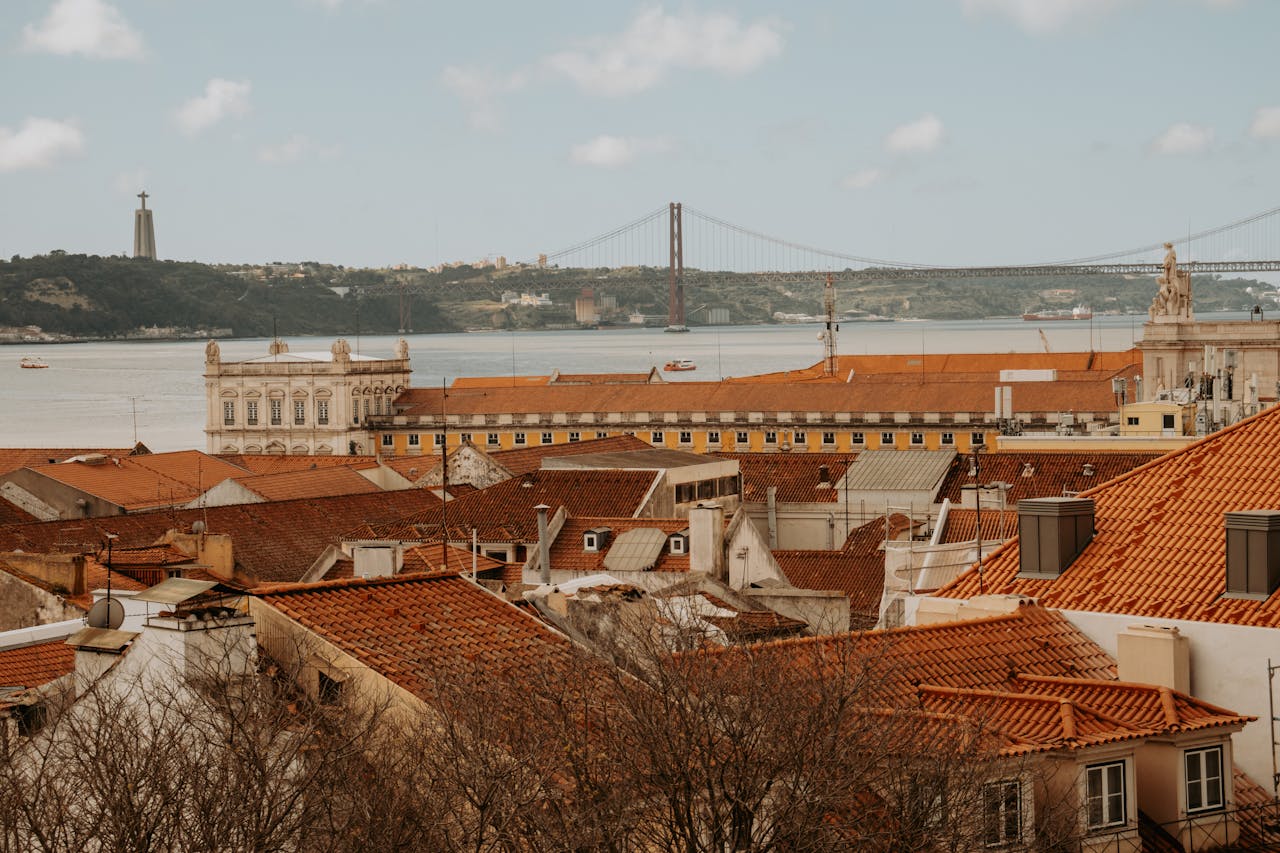 Miradouro de Santa Catarina at golden hour. Still one of the most beautiful places on Earth. Also a place that started to feel less like home.
What finally broke us
Three specific things tipped the scale.
One: healthcare. The SNS (public health system) is excellent in principle. In practice, our assigned family doctor had a 3-week wait for any appointment. A dermatologist referral for a mole check — 7 months. Private was an option (€120/mo for insurance), but even private specialists were booking out 6 weeks. When my partner needed a minor surgery in early 2025, the public wait was 9 months. We paid €1,800 out of pocket for private.
Two: the NHR sunset. In October 2023, Portugal announced it was ending the NHR program. We still qualified for the remainder of our 10 years, but the narrative around Portugal suddenly flipped. Every news article started with "before the tax haven ends…" and "Portugal is turning on foreigners." The friendly, slightly bemused welcome we'd gotten in 2022 became something else. Not hostile — just tired.
Three: the community. By early 2025, most of our original friend group had left. Some went back home. Some moved to Spain. Some bought places in rural Alentejo where life was still slow. The Portuguese friends we'd made — the people we'd built our actual life around — had mostly moved to the suburbs or out of Lisbon entirely. Our Portuguese teacher moved to Tomar. Our upstairs neighbor moved to Setúbal. Dona Amélia's son sold the building.
We still loved the city. But the city we loved wasn't there anymore.
The decision
In December 2025, over a bottle of wine on our roof terrace, we made a list:
Why we came to Lisbon:
- Slow pace
- Community feel
- Affordable
- Great weather
- Safe
- Warm people
Which of those are still true in 2026:
- Slow pace: yes, but only in neighborhoods we couldn't afford anymore
- Community feel: gone for us
- Affordable: no
- Great weather: yes
- Safe: yes
- Warm people: yes, but more guarded
The list didn't say "leave Lisbon." It said "find the version of Lisbon that's still the place we came for."
We toured Porto in January 2026. We found a 2-bedroom in Foz do Douro for €1,100/month — the same price we'd paid for a 1-bedroom in Graça three years earlier. Smaller expat scene. Actual Portuguese neighbors who'd lived in the building for 30+ years. A café downstairs where the owner immediately started working on our names.
We moved in March.
 The final move. Three years, 47 square meters, a lot of books.
What we'd tell our 2022 selves
If I could go back, I'd tell us four things.
1. Pick Porto (or Braga, or Coimbra). Lisbon was already changing fast in 2022. The wave we surfed in on — D7 visas, NHR, remote work — was about to crest and crash. Second cities were always the smarter play.
2. If you're going to stay 5+ years, buy. We paid €52,800 in rent over three years. If we'd bought a small place in Graça in 2022 (when it was possible), we'd have €200K+ in equity appreciation. We were scared to commit. That fear cost us real money.
3. Learn Portuguese seriously from month one. A1 classes get you "good morning, can I have a bifana?" They don't get you into Portuguese friendships. The ceiling is around B2, and the return on investment (social, cultural, emotional) is massive. Commit to an hour of Portuguese a day. Tell people at dinner parties you're learning. They'll switch to Portuguese when they see you trying.
4. Don't live in the expat bubble. Princípe Real, Chiado, Cascais, parts of Alfama — these are beautiful but increasingly separate from Portuguese life. Rent slightly further out. Go to cafés where nobody's on a laptop. Join a Portuguese book club, dance class, or language exchange where you are the minority.
Is Lisbon still worth it?
Yes — for some people. Not for us in 2026, but absolutely for:
- Retirees on $4,000+/month with private insurance, who want culture, weather, and safety over price.
- Portuguese-speaking families with kids in Portuguese schools who integrate quickly.
- People who can buy property — the appreciation thesis is real if you hold 10+ years.
- Digital nomads passing through for 3–6 months without trying to build a life.
It's not worth it for:
- Middle-class couples trying to live centrally on under $4K/mo.
- Anyone who needs quick healthcare access for chronic conditions.
- People who primarily socialize in English — you'll find yourself in an expat bubble that feels the same in Mexico City, Barcelona, or Bali.
Where we went (and how we pay for it)
Porto has been, objectively, better in every way we can measure for our lives — rent, healthcare wait times, community, pace. We kept the same D7 visa; it transfers anywhere in Portugal. We're on month two.
A practical note: if you're moving internationally — between cities within a country or between countries — deal with currency. We used Wise for everything from moving our US-denominated savings to paying the new deposit in Porto. Over three years in Lisbon, using Wise instead of our US bank saved us an estimated €3,200 in foreign transaction fees and currency spread. That's roughly two months of rent we otherwise would have donated to Chase.
What happens next
We don't know if Porto is permanent. Maybe we'll end up in rural Portugal in five years, or back in the US, or somewhere else entirely. The lesson of Lisbon was that places change, and being attached to a specific geography for life is a strange thing to ask of yourself at 34.
What we do know: the dream that brought us here — slow European coastal life, strong coffee, warm people, an affordable path to a European passport — is still possible. It's just not in Lisbon anymore.
It's in Porto, and in Braga, and in Coimbra, and in a hundred other cities most people don't think about first. If you're thinking of moving to Portugal, go to those places before you commit. Look at what's there now, not what was there in 2019.
We still love Lisbon. We'll visit. But we won't live there again.
If you're considering Portugal: start with our full Portugal country guide, or compare Lisbon vs. Porto cost of living side-by-side. The 2-minute Country Match Quiz can tell you if Portugal still makes sense given your 2026 situation — or if Spain, Greece, or somewhere unexpected fits better.
Personal Relocation Assessment
This article is general. Your situation is not.
Tell us your nationality, income and timeline and we research it by hand: where you actually qualify, the route, the current threshold with the law it comes from, and what usually goes wrong in a position like yours. Written by an expert, in 3 working days.
Enjoyed this article?
Subscribe for more expat tips and guides.
Which country is right for you?
Answer 6 quick questions about your budget, lifestyle, and priorities. Our AI ranks 122 countries and builds a personalised relocation plan.
Enjoyed this article? Share it with fellow expats