Mexico City and Medellín have become the two most-Googled Latin American cities for American expats in 2026. They share a few things — Spanish-speaking, affordable, increasingly nomad-friendly — but they're more different than the headlines suggest.
CDMX is a massive global metropolis. Medellín is a mountain city of two million with a fundamentally different rhythm. Both attract Americans for different reasons, and choosing the wrong one wastes a year of your life.
Here's the honest 2026 comparison: cost, visa, safety, healthcare, lifestyle, and which one is actually right for you.
Key Takeaways
- Cheaper: Medellín wins by ~25–35% on rent and food. CDMX is no longer a "cheap city" by 2026 standards.
- Easier visa: Colombia's M-visa (€1,250/mo income req) is faster and lower-bar than Mexico's Temporary Resident (~$2,800/mo).
- Safer (statistically): Mexico City is safer for expats in central neighborhoods than Medellín's outer comunas, but Medellín's central zones (El Poblado, Laureles) are now arguably comparable to CDMX's Roma/Condesa.
- Climate: Medellín wins decisively — eternal spring (18–25°C year-round). CDMX has cold winters (5°C nights) and intense rainy seasons.
- Infrastructure: CDMX wins on size — better airport connectivity, more international flights, larger expat scene, more variety.
- Internet: Medellín is faster and more reliable for remote work (avg 200 Mbps in El Poblado vs 100 Mbps in Roma Norte).
- Best for: CDMX for culture-vultures and high-budget retirees. Medellín for digital nomads and budget-focused expats under 50.
The quick answer
If you're a digital nomad or budget-conscious expat under 50, Medellín wins. Lower costs, better climate, easier visa, faster internet, smaller learning curve.
If you're a high-income retiree, art-and-culture obsessive, or work in finance/diplomacy that requires a major capital, CDMX wins. More museums, better restaurants, larger international community, more daily life options.
Now the details.
Cost of living: Medellín is meaningfully cheaper
| Monthly cost (single expat, central) | Mexico City (Roma/Condesa) | Medellín (El Poblado/Laureles) |
|---|---|---|
| Rent (1BR, furnished) | $1,200–$1,800 | $700–$1,200 |
| Coworking | $180 | $150 |
| Groceries | $400 | $300 |
| Eating out (10x/mo) | $400 | $280 |
| Transport (Uber + metro) | $150 | $100 |
| Health insurance (private) | $120 | $100 |
| Gym + entertainment | $200 | $150 |
| Total monthly | $2,650–$3,250 | $1,780–$2,280 |
For a couple: add ~30–40% to each city's total.
The honest take: Mexico City rent has surged 60%+ since 2020 driven by remote work demand from Americans. A 1BR in Roma Norte or Condesa now costs the same as Berlin. Medellín hasn't seen this shift to the same degree (yet) — El Poblado is rising, but secondary neighborhoods like Laureles and Envigado still offer 2020 prices.
Pro tip on transfers: If your income is in USD and you're paying rent in MXN or COP, your US bank takes a 3–5% currency markup on every transfer. Wise uses the real mid-market rate (the rate Google shows you) with transparent fees of 0.4–0.6%. Saves $40–$80/month for most expats.
Visa: Colombia is significantly easier
Mexico — Temporary Resident Visa
- Income requirement: ~$2,800/mo (200x daily minimum wage) for 6 consecutive months — proven via bank statements
- OR: ~$110,000 in savings/investments held for 12 months
- Application location: Mexican consulate in your home country (NOT in Mexico)
- Initial validity: 1 year, renewable up to 4 years total
- Path to permanent residency: 4 years of continuous Temporary Resident status
- Path to citizenship: 5 years from Permanent Resident status (so 9+ years total)
Colombia — Migrant (M) Visa
- Income requirement: ~$1,250/mo (10x Colombian minimum wage) — proven via bank statements
- OR: Real estate purchase >$80,000, business investment >$45,000
- Application location: Colombian consulate OR online from inside Colombia (significant advantage)
- Initial validity: 3 years (longer than Mexico's 1 year)
- Path to permanent residency: 5 years on M visa
- Path to citizenship: 5 years total (or 2 years if married to a Colombian)
Verdict: Colombia wins on income threshold ($1,250 vs $2,800), ease of application (in-country option), and citizenship timeline (5 years vs 9+). The only Mexico advantage is more in-country flexibility once you're a permanent resident — better for "live in Mexico forever" plans.
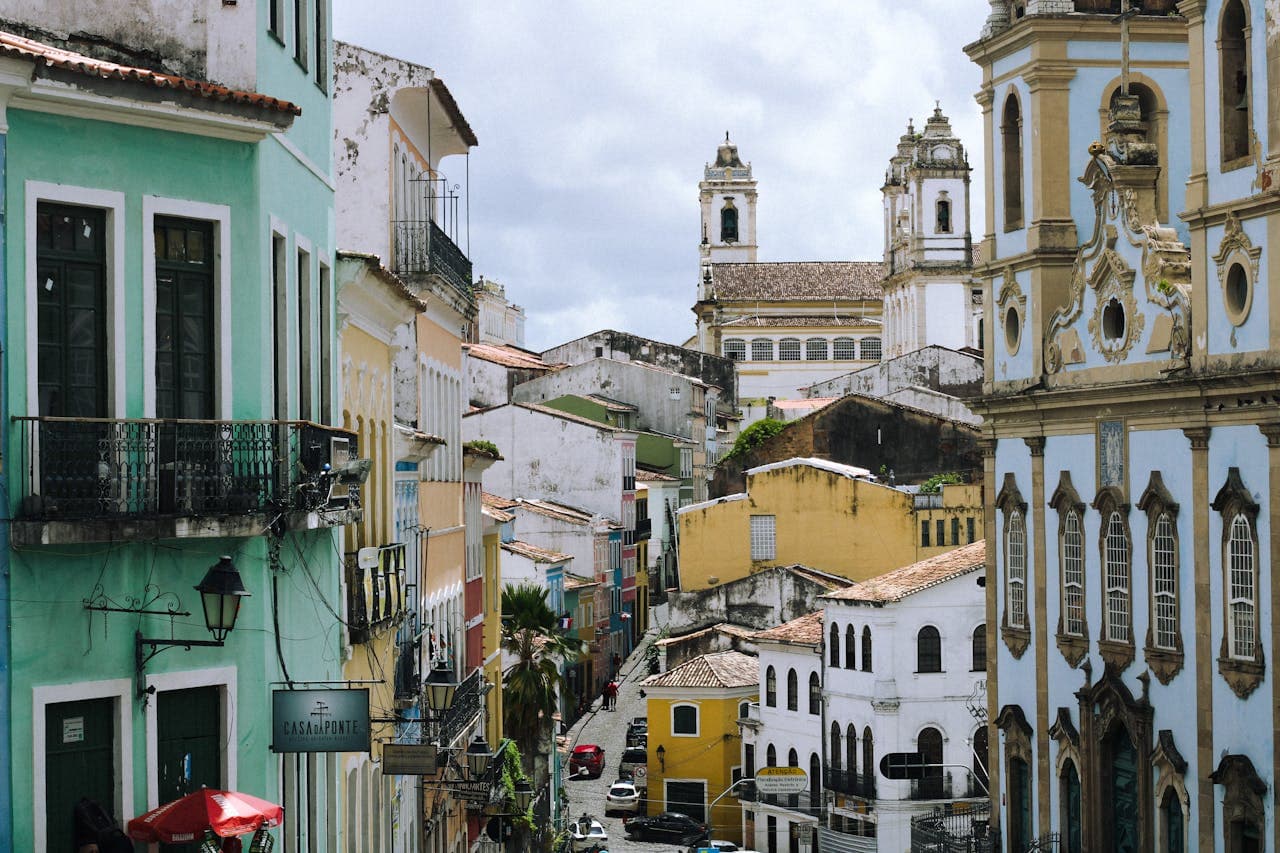
 Roma Norte and Condesa are CDMX's expat zones — leafy, walkable, and now priced like Brooklyn.
Safety: nuanced — both are fine in the right zones
Crime statistics for both cities are misleading at the city level because safety is hyperlocal in Latin America. What matters is which neighborhood you're in.
Mexico City
- Safe expat zones: Roma Norte, Roma Sur, Condesa, Polanco, Coyoacán, San Miguel Chapultepec
- Avoid (not for tourists): Tepito, Iztapalapa edges, parts of Doctores
- Specific concerns: Express kidnappings (rare in expat zones, but happen); Uber app-tampering scams; drink-spiking in nightlife areas
- Earthquake risk: Real (Sept 19, 2017 earthquake destroyed parts of Roma/Condesa)
Medellín
- Safe expat zones: El Poblado, Laureles, Envigado, parts of Sabaneta
- Avoid (not for tourists): Comuna 13 (now a tour zone but stay with groups), Bello edges, parts of Castilla
- Specific concerns: Scopolamine ("devil's breath") drugging in nightlife areas, online dating scams, increasingly aggressive petty theft in El Poblado nightlife
- Earthquake risk: Lower than CDMX
The honest verdict: A solo American expat living in Roma Norte (CDMX) is statistically about as safe as one living in El Poblado (Medellín). Both require basic Latin America street smarts — don't show wealth, don't accept drinks from strangers, don't walk drunk at 3 AM. Beyond that, both cities are livable.
Healthcare: both excellent in private system
| CDMX | Medellín | |
|---|---|---|
| Top private hospitals | Hospital Médica Sur, ABC Medical Center, Hospital Ángeles | Las Vegas Hospital, Pablo Tobón Uribe, Centro Médico Imbanaco |
| Private insurance (single, mid-30s) | $80–$160/mo | $60–$130/mo |
| Pay-as-you-go specialist visit | $50–$120 | $40–$80 |
| Pay-as-you-go general doctor | $30–$70 | $25–$50 |
| Quality (vs US standards) | High in private, mediocre in public | High in private, mediocre in public |
Both cities have the "Latin America healthcare paradox": the public system is overwhelmed and slow, but the private system is excellent and affordable — often better value than US health insurance.
Practical setup:
- Year 1: International expat insurance (SafetyWing at $42–$55/mo for under-40s, or Cigna Global at $180+ for over-40s)
- Year 2+: Switch to local private (Sura, Allianz Mexico, AXA Colombia) for $80–$160/mo
Most American expats keep US Medicare Part A (free) "as backup" if they ever return.
Climate: Medellín wins by a mile
This is the single biggest difference and most underrated factor.
Mexico City
- Elevation: 2,240m (causes mild altitude effects for newcomers)
- Winter (Dec–Feb): Days 18–22°C, nights 5–10°C, need a heater
- Spring (Mar–May): Hot, dry, intense pollution (March is the worst month)
- Summer (Jun–Sep): Daily afternoon thunderstorms, flooding common
- Fall (Oct–Nov): The best time of year — mild, dry, sunny
Medellín ("City of Eternal Spring")
- Elevation: 1,495m (more comfortable than CDMX)
- Year-round: 18–25°C every single month
- Wet vs dry: April and October are wettest, December–February driest
- No heating, no AC needed — for most apartments
This matters more than people realize. Living in CDMX means heated coffee shops in February and rain during summer afternoons. Living in Medellín means walking outside in shorts every day of the year.
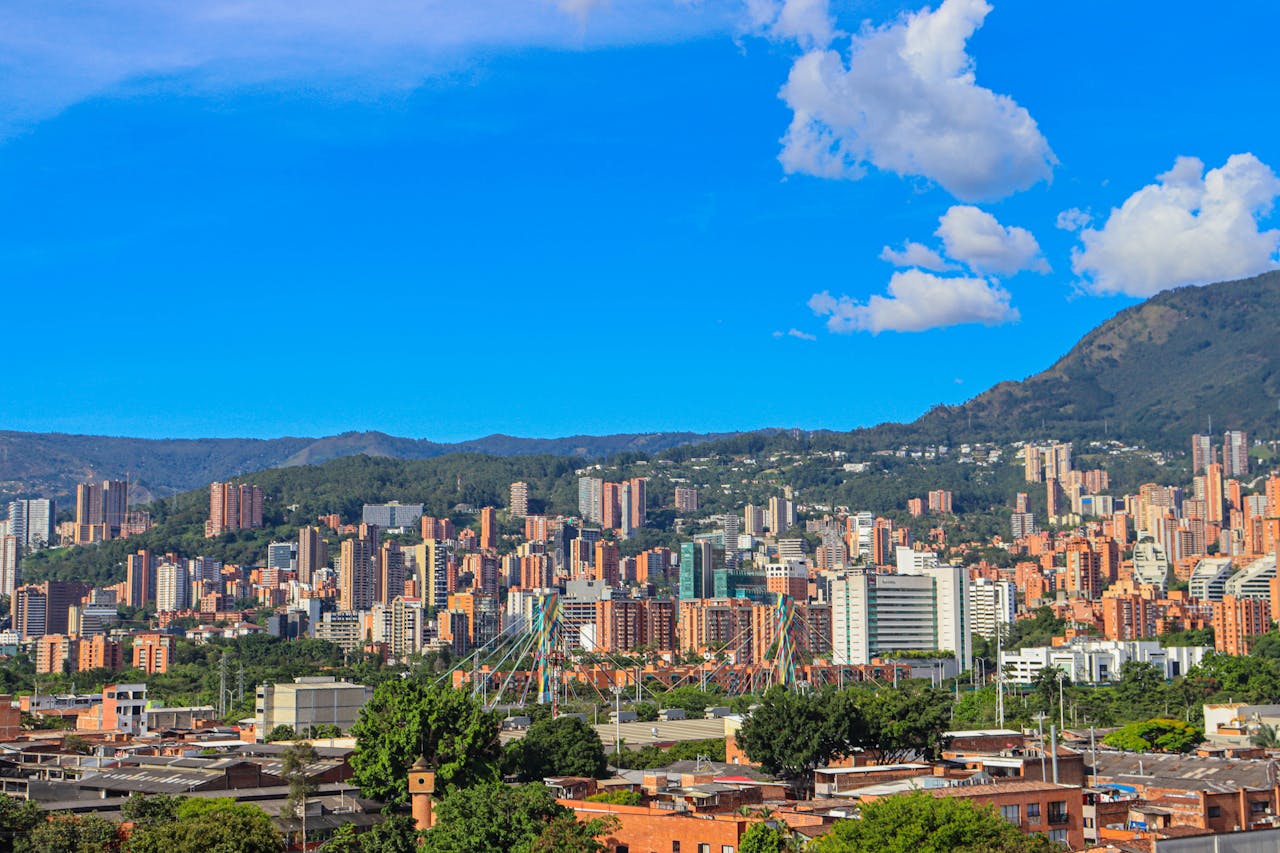 El Poblado at golden hour. Medellín's sweet spot is the consistent 22°C climate — no other major Latin American city matches it.
Internet & remote work infrastructure
Both cities are usable for remote work. The differences:
| Metric | CDMX | Medellín |
|---|---|---|
| Avg apartment internet (Mbps) | 100–200 | 200–400 |
| Coworking density (central) | High | Very high (El Poblado is dense) |
| Best coworking spaces | WeWork, Selina, Público, Distrito | Selina, Tinkko, La Casa Redonda, Atom House |
| Power outages | Rare | Rare |
| Time zone vs US East Coast | Same as CST (no offset most of year) | Same as EST (no offset year-round, no DST) |
Medellín has a small but real advantage for US-based remote workers: it's on Eastern Time year-round, no DST shift. Easier to maintain US East Coast meeting schedules.
Cultural fit: very different vibes
Mexico City
- Pace: Fast, chaotic, dense
- Dating scene: Larger, more international, more app-based
- Spanish accent: Clear, slow, easier for learners
- Food culture: World-class — CDMX has more top-50-world restaurants than any Latin American city
- Nightlife: Spread across many neighborhoods, 18+ to 50+ scenes
- Expat scene: Massive, but somewhat fragmented (Americans, Europeans, South Americans, all in different bubbles)
- Best for: Intellectuals, foodies, art-lovers, high-income retirees
Medellín
- Pace: Slower, more relaxed, easier to make friends
- Dating scene: Notoriously active for foreign men; more challenging for foreign women
- Spanish accent: Paisa accent — fast, slangy, more challenging for learners
- Food culture: Decent but underwhelming compared to CDMX (improving fast)
- Nightlife: Concentrated in El Poblado, more of a "scene" than CDMX
- Expat scene: Heavy nomad/Twitter/crypto crowd, more cohesive than CDMX
- Best for: Solo nomads, dating-focused expats, climate-sensitive retirees, fitness people (mountains for hiking)
What about earthquakes, drugs, and the cartel question?
Two questions every American asks:
1. Earthquakes? CDMX sits on a former lake bed — earthquakes amplify there. The 2017 quake killed 369 people in CDMX. Building codes have improved, but it's a real risk. Medellín has minimal earthquake risk.
2. Cartels and security? Both Mexico and Colombia have cartel presence, but neither targets foreign expats in expat neighborhoods. Tourist-zone violence is rare. The 2024 increase in petty theft in Medellín nightlife is real but manageable.
The pragmatic view: Don't move to Latin America if you panic about background risk. Both cities are safer for expats than 80% of US cities by any measurable metric.
Final verdict by expat type
"I'm a digital nomad, age 25–40, want best climate"
→ Medellín. No question. El Poblado or Laureles.
"I'm a retiree, $4K+/month, want culture and infrastructure"
→ CDMX. Polanco or San Miguel Chapultepec.
"I'm a couple with kids, need international schools"
→ CDMX. Better international school options (American School, Greengates, Britannica).
"I want the cheapest livable Latin American city"
→ Medellín (Laureles or Envigado, not El Poblado).
"I want EU passport eventually but Latin America first"
→ Medellín. Colombian citizenship in 5 years allows visa-free Schengen travel and faster processing for further EU paths.
"I'm in tech and need US East Coast time alignment"
→ Medellín (EST year-round, no DST).
"I want world-class food and museums"
→ CDMX. Nothing in Latin America matches it.
What to do next
- Visit both before committing. A week in each is enough to know.
- Start in Airbnb in your target neighborhood for 30 days. Test the actual daily life.
- Join the city's main expat WhatsApp/Telegram groups before you move (Medellín DN group has 5,000+ members; CDMX Expats has 3,000+).
- Set up Wise to receive your USD income at the real exchange rate. Avoids the hidden 3–5% your US bank charges on every conversion.
- Get SafetyWing coverage for your first 6 months — required for visa applications and gives you time to research local providers.
Compare these cities with others: Mexico country guide · Colombia country guide · or use our Country Match Quiz to see which Latin American city matches your specific budget, climate, and visa situation.
Personal Relocation Assessment
This article is general. Your situation is not.
Tell us your nationality, income and timeline and we research it by hand: where you actually qualify, the route, the current threshold with the law it comes from, and what usually goes wrong in a position like yours. Written by an expert, in 3 working days.
Enjoyed this article?
Subscribe for more expat tips and guides.
Which country is right for you?
Answer 6 quick questions about your budget, lifestyle, and priorities. Our AI ranks 122 countries and builds a personalised relocation plan.
Enjoyed this article? Share it with fellow expats