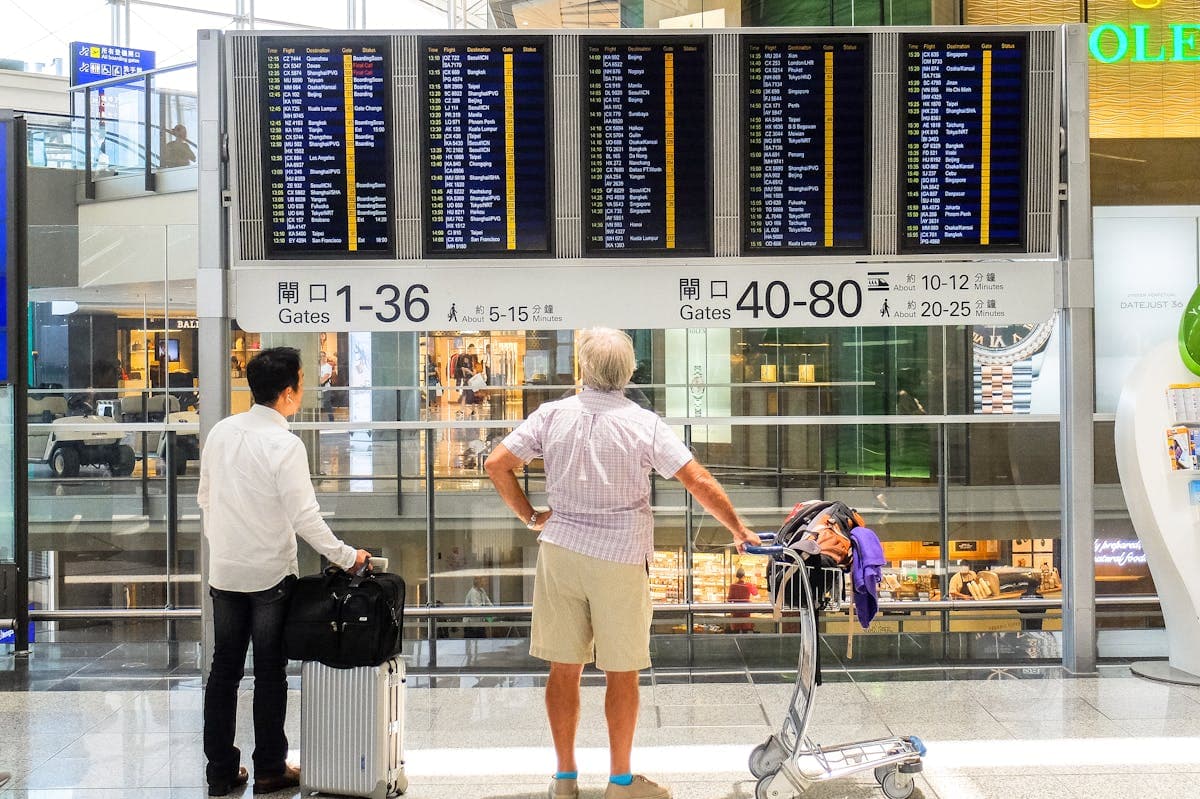
The world has changed dramatically in early 2026. Three major conflicts are reshaping the global map for anyone living or working abroad — and if you're an expat, digital nomad, or planning a move overseas, the rules have changed overnight.
This isn't a geopolitics explainer. This is a practical survival guide for the millions of globally mobile professionals who need to know: where is safe, what's happening, and what should I do right now?
The Three Conflicts Reshaping Expat Life in 2026
1. The Iran War: Middle East in Crisis
On February 28, 2026, a joint US-Israeli military campaign struck Iran, killing Supreme Leader Ali Khamenei and dozens of senior military figures. Iran's retaliatory missile and drone strikes have hit targets across the Gulf — including Dubai, where the Burj Al Arab and Dubai International Airport suffered damage.
What this means for expats:
- The U.S. State Department issued "DEPART NOW" alerts for 16 countries: Bahrain, Egypt, Iran, Iraq, Israel, the West Bank, Gaza, Jordan, Kuwait, Lebanon, Oman, Qatar, Saudi Arabia, Syria, UAE, and Yemen
- Flights across the Middle East came to a near-complete halt, stranding thousands of expatriates and tourists
- Dubai — home to over 3 million expats — saw a rush to exit as the "bubble of safety" burst
- The UAE's housing market, business pipeline, and expat confidence have all taken hits
2. The Afghanistan-Pakistan War
Pakistan declared "open war" with Afghanistan on February 27, 2026, after the two countries exchanged cross-border strikes. Pakistan launched airstrikes on Kabul, Kandahar, and Paktika; Afghanistan struck back at Pakistani military posts.
What this means for expats:
- Pakistan is now at Travel Advisory Level 3 (Reconsider Travel) — up from Level 2
- U.S. non-emergency government employees at the Lahore and Karachi consulates were ordered to leave
- The border region is an active conflict zone — foreigners are prohibited from traveling within 50km of the Afghan border
- Over 115,000 people displaced in Afghanistan, 3,000+ in Pakistan
3. India-Pakistan Tensions: The Sindoor Aftermath
While not an active war in March 2026, the aftermath of Operation Sindoor (May 2025) continues to strain India-Pakistan relations. India's 88-hour precision strike campaign against militant camps in Pakistan-administered Kashmir — triggered by the Pahalgam attack that killed 26 civilians — has left relations at their lowest point in decades.
What this means for expats:
- India terminated the Indus Waters Treaty, escalating economic tensions
- Pakistan's President Zardari publicly warned of "another war" in March 2026
- Travel near the Line of Control (Kashmir) is strictly prohibited
- Indian visa restrictions on Pakistani nationals remain in effect
- India itself remains safe for expats and digital nomads in most regions — Goa, Bangalore, Mumbai, and Delhi continue to operate normally
The Full "No-Go" List: 24 Countries to Avoid in 2026
As of March 2026, the U.S. State Department lists these countries at Level 4 (Do Not Travel):
| Region | Countries |
|---|---|
| Middle East | Iran, Iraq, Lebanon, Syria, Yemen, Gaza |
| South/Central Asia | Afghanistan |
| Europe | Belarus, Russia, Ukraine |
| Africa | Burkina Faso, Central African Republic, Libya, Mali, Niger, Somalia, South Sudan, Sudan |
| Americas | Haiti, Venezuela |
| Asia | Burma (Myanmar), North Korea |
Level 3 (Reconsider Travel) countries include Pakistan, and much of the broader Middle East is under heightened advisory.
The UK Foreign Office's "advise against all travel" list largely mirrors this, adding Israel and Palestine explicitly.
The Dubai Question: Should Expats Stay or Leave?
Dubai deserves its own section because it's home to one of the world's largest expat communities — and the Iran war has directly impacted it.
The case for leaving:
- Iranian missiles and drones have struck UAE targets, including hotels and airports
- Some expats are fleeing so quickly they're abandoning pets — Dubai shelters report a surge in euthanasia requests
- The "Depart Now" advisory from the U.S. State Department covers the UAE
- Family offices and wealth managers are reconsidering their Middle East presence
The case for staying:
- Most expats surveyed say they still feel safe and are not leaving
- The UAE's air defense systems are active and have intercepted most threats
- Dubai's economy depends on expats — the government has strong incentives to maintain security
- Some see it as a temporary escalation that will de-escalate
The verdict: If you don't have a compelling reason to stay (work, family, property), it's prudent to relocate temporarily until the conflict trajectory becomes clearer. If you're staying, have an evacuation plan: know your embassy's emergency number, keep your passport accessible, and have a flight fund ready.
Where Should Expats and Digital Nomads Go Instead?
The good news: more than 50 countries now offer dedicated digital nomad visas, and dozens of safe, affordable, expat-friendly destinations are completely unaffected by these conflicts.
Tier 1: Safest + Best Infrastructure
| Country | Why It's Great | Nomad Visa? | Budget From |
|---|---|---|---|
| Portugal | #1 expat destination in Europe, D7 visa, Lisbon tech scene | Yes | €1,500/mo |
| Spain | Top of 2026 Digital Nomad Visa Index, Barcelona & Valencia | Yes | €1,400/mo |
| Japan | Safest country for solo travelers, Digital Nomad Visa launched | Yes | ¥180k/mo |
| New Zealand | #4 on Global Peace Index, English-speaking | Skilled Worker | NZD 2.5k/mo |
| Singapore | #1 safety ranking globally, world-class infrastructure | Employment Pass | $2,500/mo |
Tier 2: Affordable + Safe
| Country | Why It's Great | Nomad Visa? | Budget From |
|---|---|---|---|
| Thailand | LTR visa, massive nomad community, ultra-low cost | Yes | $1,000/mo |
| Vietnam | Fastest-growing nomad destination in SE Asia | E-Visa | $700/mo |
| Colombia | Digital Nomad Visa, Medellín is a nomad mecca | Yes | $700/mo |
| Mexico | US time zones, vibrant culture, Temporary Resident visa | Yes | $800/mo |
| Georgia | 1 year visa-free, 1% tax, incredibly affordable | Visa-free | $800/mo |
Tier 3: Under-the-Radar Gems
| Country | Why It's Great | Nomad Visa? | Budget From |
|---|---|---|---|
| Albania | Europe's most affordable, 1-year visa-free for most | Visa-free | $800/mo |
| Croatia | EU member, Adriatic coast, Digital Nomad Visa | Yes | €1,300/mo |
| Uruguay | South America's safest country, stable economy | Residency | $1,200/mo |
| Malaysia | English-friendly, ultra-affordable, MM2H visa | Yes | $1,000/mo |
| Mauritius | Premium Visa for remote workers, tropical paradise | Yes | $1,500/mo |
Your Expat Emergency Checklist
Whether you're currently in a conflict zone or planning your next move, here's what to do right now:
If You're in an Affected Area
- Register with your embassy — Sign up for travel alerts (U.S. citizens: STEP program; UK: FCDO alerts)
- Keep documents accessible — Passport, visa, insurance documents, and digital copies in the cloud
- Build an emergency fund — Have at least $3,000–5,000 accessible for last-minute flights and accommodation
- Know your exit routes — Land borders, nearby airports in neighboring countries, embassy evacuation buses
- Get proper insurance — Standard travel insurance often excludes war zones; get crisis evacuation coverage (e.g., Global Rescue, Crisis24)
If You're Planning a Move Abroad
- Avoid Level 3 and 4 countries — This seems obvious, but many nomads still underestimate risk
- Choose countries with strong rule of law — Portugal, Japan, New Zealand, and Singapore aren't just safe; they have systems that protect foreigners
- Diversify your base — Don't put all your eggs in one country; have a Plan B destination
- Build community before you arrive — Join expat Facebook groups, attend coworking meetups, connect on Nomad List
- Check visa requirements now — Processing times have increased as embassies deal with evacuation workloads
The Silver Lining: Opportunity in Crisis
Every crisis reshuffles the deck. While some destinations become dangerous, others become more accessible and welcoming:
- Portugal and Spain are seeing a surge in expat applications from people leaving the Gulf
- Southeast Asia — particularly Thailand and Vietnam — is experiencing a boom in digital nomad arrivals
- Latin America is emerging as the go-to "safe hemisphere" for globally mobile workers
- Countries like Georgia and Albania offer visa-free stays and rock-bottom costs for those who need to relocate quickly
The 2026 conflicts are a stark reminder: location independence isn't just a lifestyle perk — it's a survival strategy. The ability to move quickly, work from anywhere, and maintain multiple options is more valuable than ever.
What Happens Next?
The situation is evolving daily. We'll continue updating this guide as travel advisories change and new information emerges. In the meantime:
- Bookmark our country guides for detailed visa, cost of living, and safety information on 122 countries
- Use our country comparison tool to compare your options side by side
- Check our rankings to find the cheapest, safest, and best-connected destinations
- Take our AI matching quiz to get personalized country recommendations based on your budget and priorities
Stay safe. Stay mobile. Stay informed.
Last updated: March 10, 2026. This article will be updated as the situation evolves. Sources include U.S. State Department travel advisories, UK FCDO guidance, ACLED conflict data, and reporting from Reuters, CNN, BBC, Al Jazeera, and Bloomberg.
Personal Relocation Assessment
This article is general. Your situation is not.
Tell us your nationality, income and timeline and we research it by hand: where you actually qualify, the route, the current threshold with the law it comes from, and what usually goes wrong in a position like yours. Written by an expert, in 3 working days.
Enjoyed this article?
Subscribe for more expat tips and guides.
Which country is right for you?
Answer 6 quick questions about your budget, lifestyle, and priorities. Our AI ranks 122 countries and builds a personalised relocation plan.
Enjoyed this article? Share it with fellow expats