Western Europe
Central & Eastern Europe
Asia & Middle East
Americas
Oceania & Africa
Expat Topics
🇰🇼 The expat guide · 2026
Kuwait.
Tax-free Gulf living with world-class salaries - 3.4 million expats, zero income tax, and generous employment packages in one of the richest countries per capita on Earth
Minimum Wage
KWD 75/mo
~$245/mo, unchanged since 2017-18
1-BR Rent (Kuwait City)
$600–$900/mo
Salmiya / Hawally area
Peace Index
~#42
Global Peace Index 2026
Income Tax
0%
No personal income tax
Residency Permit Fee (NEW)
KWD 20/yr
Doubled from KWD 10 (Dec 2025); self-sponsor KWD 500
Work Permit Fee (NEW)
KWD 325
Up from KWD 175 - effective 23 Dec 2025
Verified August 13, 2026
See 12 more figuresCan you actually move to Kuwait?
We research your nationality, income and timeline against Kuwait's current rules, and tell you whether you qualify and what it actually costs.

Why move to Kuwait?
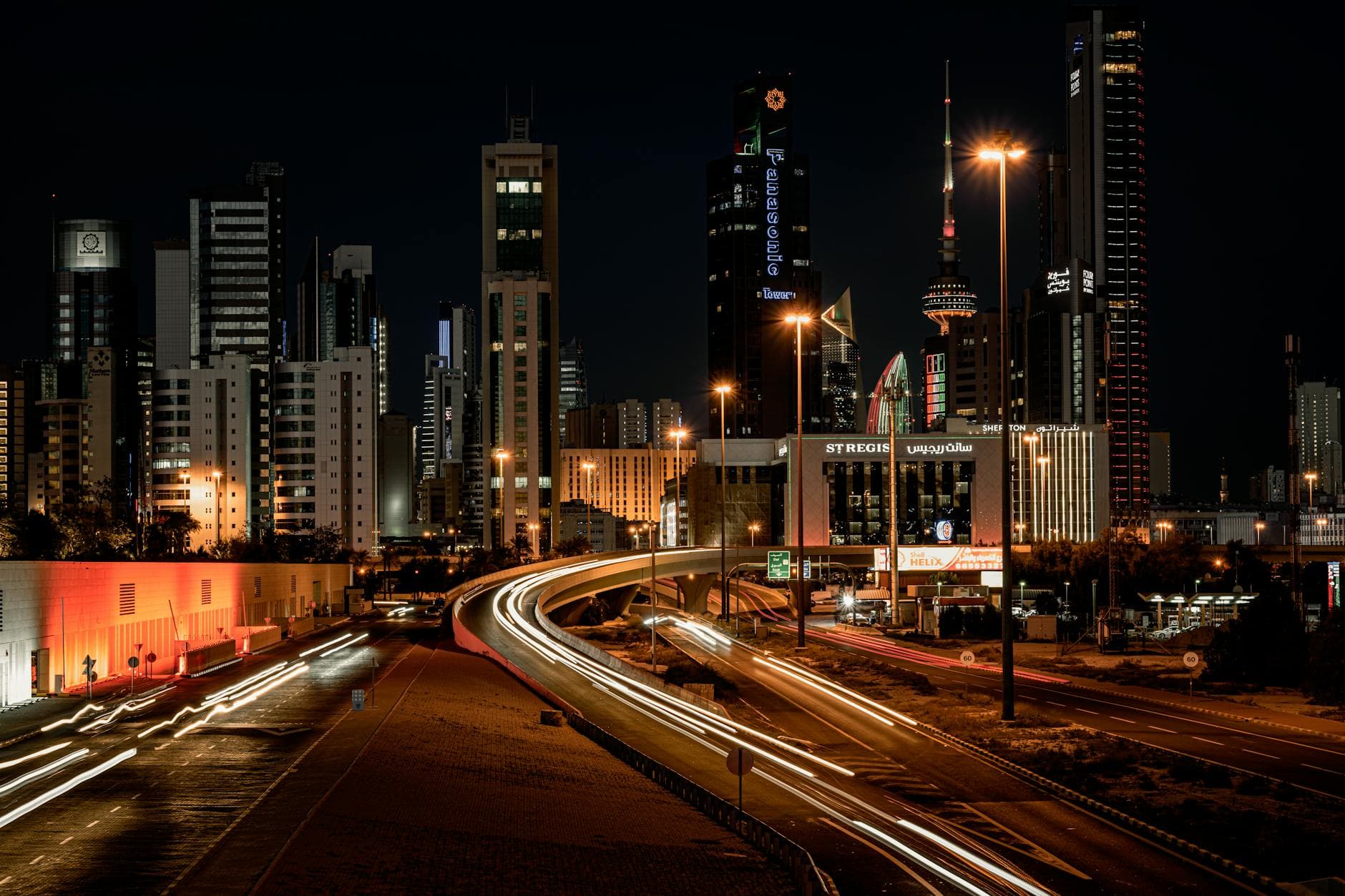
Kuwait is a compact, oil-rich city-state on the Persian Gulf with a population of ~4.9 million - of whom roughly 3.4 million (70%) are expatriates. With GDP per capita exceeding $38,000 and zero personal income tax, Kuwait offers some of the highest savings potential in the Middle East. **MAJOR 2025/2026 IMMIGRATION OVERHAUL** (effective 23 December 2025): residency permit fees doubled (KWD 10 → KWD 20/yr), self-sponsored residents KWD 500/yr, work permit fees raised significantly (KWD 175 → KWD 325 standard), mandatory health insurance doubled to KWD 100/yr, NEW KWD 300 early-employer-transfer fee for workers who change jobs within 3 years. Family sponsorship now requires KWD 800/mo minimum salary (up from previous lower threshold). Minimum wage stays at KWD 75/mo private sector (unchanged since 2017-18, widely considered inadequate). Employer-sponsored visas typically come with housing allowance, annual return flights, and end-of-service gratuity.
The rest of the Kuwait numbers
The figures that did not fit in the summary above.
| Figure | Detail |
|---|---|
| Health Insurance (NEW)KWD 100/yr | Doubled from KWD 50; mandatory for most expats |
| Family Sponsorship SalaryKWD 800/mo min | To sponsor spouse + children |
| Early Transfer Fee (NEW)KWD 300 | If changing employer within 3 years of permit |
| Visit Visa Fee (NEW)KWD 10 (~$32.60) | General visit/entry fee under Res. 2249/2025; KWD 50 for foreign investors/partners/property owners |
| Extended Dependent FeeKWD 300/yr | To sponsor dependents OTHER than spouse + children (parents, in-laws) |
| Legal SourceResolution 2249 of 2025 | Ministry of Interior, issued 23 Nov 2025, effective 23 Dec 2025 |
| Expat Population~3.4 million | 70% of total population |
| Visit → Residency ConversionKWD 150 fee | New route: university grads, tech specialists, dependents can convert visit visa to residency permit for KWD 150 |
| Multi-Trip Exit PermitSince Jan 2026 | Ashal now issues single permit covering multiple exits within set validity — no repeat requests for each brief trip |
| Parliament StatusDissolved (4 yrs) | Emir dissolved May 2024 - partial constitution suspended up to 4 yrs to fast-track reforms |
| Pillar Two CIT15% MNEs | OECD GloBE applies to MNEs ≥€750M turnover; Kuwait excise + corporate tax in 4-yr plan; no VAT |
| Ashal Exit ApprovalMandatory Jul 2025+ | Private-sector workers need employer approval via Ashal portal before leaving Kuwait |
The Kuwait basics
10 essentials every expat should know - from the practical to the political.
Is Kuwait actually your best option?
This page tells you what Kuwait is like. It cannot tell you whether it beats the four other countries you should be looking at, because that answer changes with your passport. Income thresholds, tax treaties and citizenship timelines are all nationality specific, and the general rule is often not the rule that applies to you.
A Personal Relocation Assessment answers it for your case. You tell us your nationality, income, household and timeline, and we our expert researches it against the law as it stands: which countries you actually qualify for, the route, the current threshold with the instrument it comes from, and what is most likely to go wrong in a position like yours.

Food culture
Machboos, harees, gabout, jereesh, karak chai - Kuwaiti Khaleeji cuisine with strong Indian/Persian influences
Explore

Festivals & traditions
Kuwait Towers, Sadu (UNESCO Bedouin weaving), Souq Al Mubarakiya, Liberation Tower - Kuwait's oil-era cultural icons
Explore

Coast & nature
Gulf Road corniche, Marina Beach, Failaka Island ferry, Souk Sharq waterfront - Kuwait's Persian Gulf shoreline
Explore

Heritage & landmarks
Kuwait Towers, Al Hamra Tower (world's tallest sculpted tower), Grand Mosque, The Avenues mall - Kuwait's modern landmarks
Explore
7 reasons people stay longer than they planned
The pull of Kuwait isn't one big thing - it's a stack of small ones, each compounding the others.
Zero Income Tax - Maximum Savings
Kuwait levies no personal income tax, capital gains tax, or wealth tax on residents. Combined with employer-provided housing allowances and flight tickets, many expats save 50–70% of their salary. The Kuwaiti Dinar's strength (1 KWD = ~$3.26) amplifies remittance value for those sending money home.
Generous Employment Packages
Kuwaiti labor law mandates end-of-service gratuity (1 month per year of service for the first 5 years, 1.5 months thereafter), 30 days annual leave, and employers typically provide housing allowances of $500–$1,500/month, annual return flights, and medical insurance as standard benefits.
Affordable Healthcare for Residents
Expats pay a nominal KWD 50/year (~$163) for government healthcare access covering hospitalization, clinics, and medications. Private hospitals like Dar Al Shifa, Hadi Hospital, and Al Salam International offer world-class care with short wait times. International health insurance runs $100–$250/month.
Ultra-Fast 5G & Modern Infrastructure
Kuwait was among the first Gulf nations to deploy 5G nationally, with average mobile speeds exceeding 100 Mbps. Fiber broadband reaches most residential areas at 155+ Mbps. The Avenues (the Middle East's largest mall), Sheikh Jaber Causeway (the world's 4th longest bridge), and a planned metro system reflect the country's infrastructure ambitions.
English Widely Spoken
While Arabic is the official language, English is the lingua franca of business, healthcare, and daily expat life. All government services offer English options, road signs are bilingual, and the large South Asian and Western expat communities operate primarily in English. Supermarkets, restaurants, and banks all have English-speaking staff.
Strategic Gulf Location - Global Hub
Kuwait International Airport connects to 80+ destinations with direct flights to London (6.5 hrs), Dubai (1.5 hrs), Mumbai (3.5 hrs), and Manila (8 hrs). Kuwait sits at the northern tip of the Gulf, making it an easy base for weekend trips to Bahrain, Dubai, and Oman. The new Terminal 2 (opened 2024) handles 25 million passengers annually.
Coastal Living & Weekend Escapes
Kuwait's 499 km coastline offers beach resorts, marinas, and island getaways. Failaka Island has archaeological ruins and beach chalets, while the Green Island leisure complex and Marina Crescent provide waterfront dining and recreation. The mild winter months (November–March) bring perfect outdoor weather with temperatures of 15–25°C.
2 cities, 2 different lives
Pick the rhythm that fits - capital buzz, beach mornings, or a slow-living escape.

Kuwait City
The Gulf's tax-free capital - skyscrapers, luxury malls, and 3 million expats in a compact waterfront metropolis
$1,800–$3,500 /mo
Professionals, families, high-earners seeking tax-free savings

Ahmadi
Kuwait's oil capital - green garden city with family-friendly expat compounds and proximity to the southern beaches
$1,500–$2,800 /mo
Oil industry expats, families, compound living
Everything, in plain words
Visa rules, healthcare, schools, taxes - written like a friend would explain it, not like a brochure.
Visa & Residency
Kuwait operates an employer-sponsored visa system (kafala), meaning most expats need a job offer before arriving. Work visas (Article 18) are the most common, while investor visas (Article 23) and dependent visas (Article 22) serve other categories. Kuwait does not currently offer digital nomad or freelance visas - employment sponsorship is required for all long-term stays.
Read 🏥Healthcare
Kuwait operates a two-tier healthcare system with government hospitals providing subsidized care to residents and a growing private sector offering faster, premium services. Expats pay KWD 50/year (~$163) for government healthcare access, which covers hospitalization, outpatient visits, and medications. Private health insurance is increasingly common, with many employers providing it as a standard benefit.
Read 💰Cost of Living
Kuwait offers one of the world's most favorable tax environments for expats - zero income tax, no capital gains tax, and no VAT (as of 2026). The Kuwaiti Dinar (KWD) is the world's highest-valued currency at ~$3.26 per dinar. Combined with employer benefits packages, many expats save significantly more than they would in Western countries despite the Gulf's reputation for higher consumer prices.
Read 🏠Housing
Kuwait's housing market is predominantly rental - very few expats purchase property as foreign ownership is restricted. Apartments dominate the market in popular expat areas like Salmiya, Hawally, and Salwa, while villas are available in suburban areas. Many employers provide housing allowances or company-arranged accommodation, which significantly reduces the financial burden.
Read 💼Work & Business
Kuwait's economy is dominated by oil and gas (accounting for ~90% of government revenue), but the private sector - particularly in banking, construction, retail, and healthcare - employs the majority of expats. With 70% of the population being foreign workers, Kuwait's job market is inherently global, though 'Kuwaitization' policies increasingly reserve certain roles for nationals.
Read 🌆Daily Life
Kuwait is one of the safest countries in the Middle East for expats, with very low crime rates and a strong police presence. Violent crime against foreigners is extremely rare. The main safety concerns are road traffic accidents (Kuwait has one of the highest accident rates in the Gulf due to aggressive driving) and extreme summer heat. Legal norms reflect Kuwait's conservative Islamic values - alcohol is completely prohibited, and public behavior standards differ significantly from Western countries.
Read ✈️Moving Guide
Moving to Kuwait is typically straightforward because the employer-sponsored visa system means your company handles most logistics. The key steps are: accept a job offer, let the employer process your work visa, book your flight, and arrive with the right documents. Unlike countries with self-sponsored visas, you generally don't need to prove savings, buy health insurance, or find housing before arriving - your employer assists with all of this.
Read 📚Education
Kuwait has a well-developed education sector catering to its massive expat population, with over 100 private and international schools operating alongside the Arabic-curriculum government school system. International schools follow British, American, Indian (CBSE/ISC), Pakistani, Filipino, and IB curricula, with fees ranging from KWD 500 to KWD 5,000+ per year depending on the curriculum and school tier.
Read 🌅Lifestyle
Kuwait offers a unique lifestyle that blends Gulf Arab tradition with modern consumerism - tax-free shopping, world-class malls, a booming café culture, and the serene Gulf coastline define daily life. While it lacks the nightlife of Dubai or the historic charm of Oman, Kuwait compensates with genuine cultural authenticity, exceptional food, a strong sense of community among its 3.4 million expats, and the financial freedom that comes with zero income tax. The extreme summer heat shapes the annual rhythm - outdoor living thrives from October to April, while air-conditioned malls and cafés dominate the scorching summer months.
Read 📈Investing
Everything expats need to know about investing in Kuwait - from property and stocks to tax-efficient strategies, brokerage access, and building wealth abroad.
ReadTools to plan your move to Kuwait
Practical tools to turn an idea into a real plan - pick a season, time your visa, build a budget, even live a day before you go.
Best time to move to Kuwait
Season-by-season - weather, visa timing, rental markets, and expert tips
Kuwait City cost of living
Full monthly budget breakdown - rent, food, transport, utilities
Country match quiz
Eight quick questions, AI-matched country shortlist for your lifestyle
Visa finder
Search visa options by nationality, budget, and stay length
A day in Kuwait
Live a perfect day with AI - real cafés, costs, and routes
Relocation plan
Step-by-step AI moving timeline tailored to your situation
Where Kuwait ranks
See where Kuwait sits in our independent expat rankings - cost, safety, healthcare, and more.
Cheapest Countries for Expats
Ranked list of the most affordable countries for expats in 2026. Monthly budget, cost of living, internet speed, and city guides for each destination.
Countries Under $1,500/Month Cost of Living
Complete list of countries where a single expat can live comfortably on under $1,500 per month. Budget breakdowns, internet speeds, and city guides included.
Countries Where $2,000/Month Is Enough
All countries where a single expat can live well on $2,000 per month or less. Ranked by cost of living with budget details, internet, and English proficiency.
Best Countries for Remote Workers
Top countries for remote workers ranked by internet speed, cost of living, and English proficiency. Find your ideal work-from-anywhere destination in 2026.
Countries With the Fastest Internet
Ranked list of countries with the fastest broadband internet speeds for expats. Average Mbps, cost of living, and city guides for each destination.
Best Countries for Retirement Abroad
Warm-climate countries where one person can live on $2,500/month, ranked safest first by Global Peace Index. Portugal leads, then Malaysia and the Maldives. 2026.
Honest answers
The questions everyone asks before they pack a single box.
How much does it cost to live in Kuwait as an expat?
What visa do I need to move to Kuwait?
What is healthcare like in Kuwait for expats?
What are the best cities to live in Kuwait as an expat?
Is Kuwait a good place to live as an expat in 2026?
Personal Relocation Assessment
Can you actually move to Kuwait?
This page is general. Your case is not. Our relocation expert researches your nationality, income and timeline against the law as it stands, names the instrument behind every figure, and tells you where you actually qualify.
Get my assessmentExpat Insights, weekly
Visa updates, cost-of-living shifts, and real expat stories from Kuwait - straight to your inbox.
Which country is right for you?
Answer 6 quick questions about your budget, lifestyle, and priorities. Our AI ranks 122 countries and builds a personalised relocation plan.