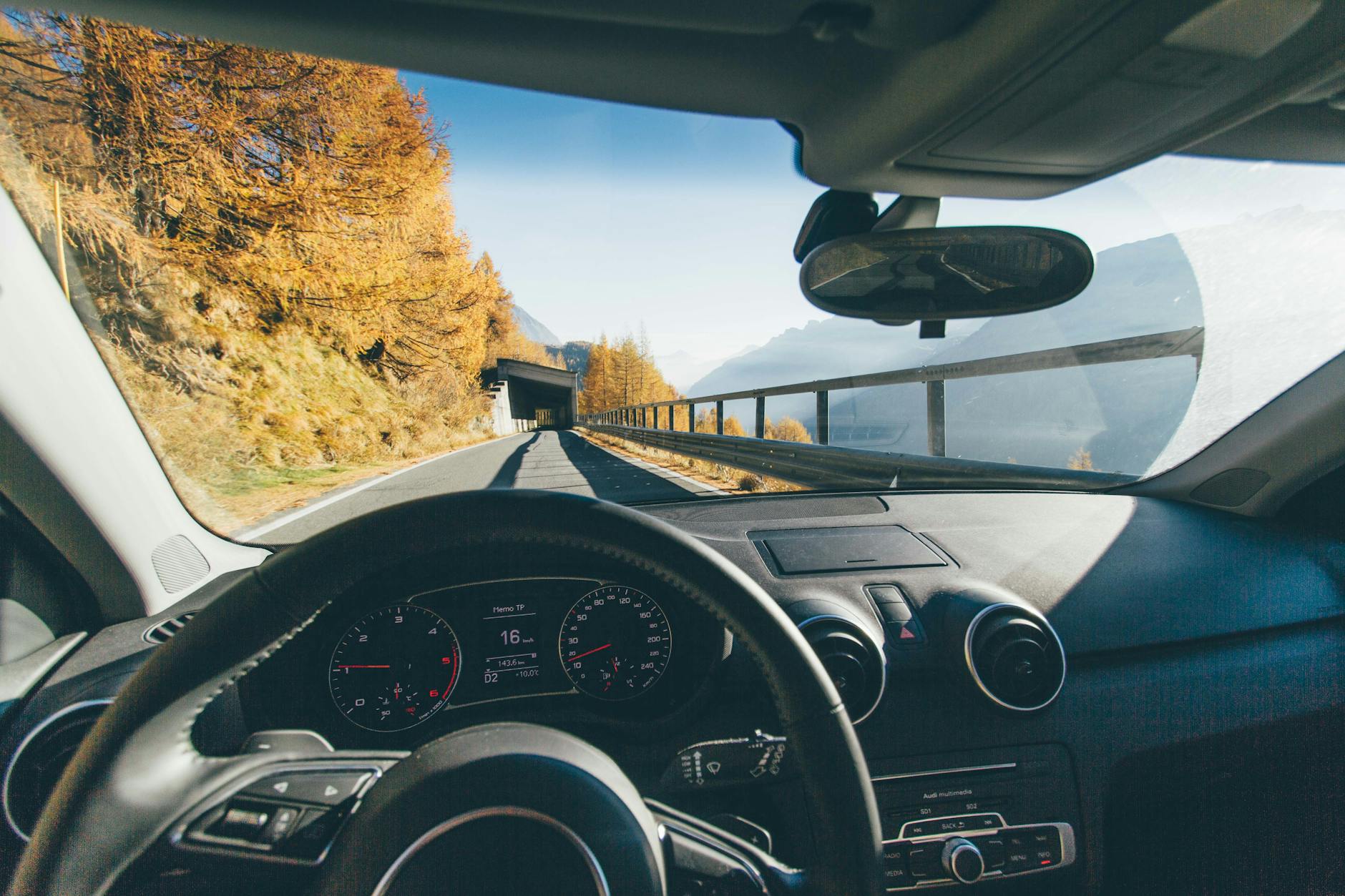
Driving abroad sounds simple until it isn't. You land in your new country, confidently rent a car, and then discover that your license isn't recognized, the steering wheel is on the wrong side, insurance costs three times what you expected, and there are traffic cameras on every corner issuing fines in a language you don't read.
After driving in 23 countries across four continents, here's everything I wish someone had told me before I turned the first ignition key abroad.
The International Driving Permit (IDP)
Quick answer: An IDP is a standardized translation of your home driving license, recognized in 174 countries. Get it from AAA in the US ($20), AA/Post Office in the UK (£5.50), or your national automobile association. Valid for 1 year. It does NOT replace your home license — you must carry both.
Common myths about IDPs:
- Myth: An IDP lets you drive anywhere. Reality: Some countries don't accept IDPs and require a local license or specific conversion.
- Myth: You only need an IDP for rentals. Reality: In many countries, driving without a valid IDP when required is technically unlicensed driving — your insurance may be void in an accident.
- Myth: IDPs are hard to get. Reality: Walk into AAA or apply online. No test, no photo requirement (some countries), issued same-day.
Countries where an IDP is sufficient (up to 1 year): France, Germany, Spain, Italy, Portugal, Greece, Thailand, Japan, Australia, New Zealand, South Africa, Brazil, Mexico, UAE, Turkey
Countries where you'll need to convert to a local license:
- Japan: IDP valid for 1 year, then must convert (no driving test required for US/UK/EU licenses)
- UAE: IDP valid for tourist stays. Residents must convert within 30 days. Conversion is straightforward for 36 "approved" countries — others require a full driving test.
- China: IDPs are NOT recognized. You must obtain a Chinese driving license (written test, no road test for most foreign license holders).
- Brazil: IDP valid for 180 days. After that, conversion required (varies by state).
Buying a car abroad: country-by-country
Buying a car in a foreign country is one of those things that seems straightforward until you try it. Every country has different registration systems, ownership transfer processes, insurance requirements, and import rules.
Portugal
Portugal is one of the easiest European countries for expats to buy a car. You need a Portuguese NIF (tax number — easy to get), a registered address, and sufficient identification. Used cars are widely available through OLX (the Portuguese Craigslist) and Stand Virtual.
Key details:
- Registration transfer: €55 + municipal tax
- Insurance: €300–€600/year for basic coverage (third-party)
- Annual inspection (IPO): €30, mandatory for cars over 4 years old
- Fuel: €1.60–€1.80/liter (among Europe's highest)
- Watch out for: Imported cars face heavy ISV (vehicle tax) based on engine size and CO2 emissions. Buying locally registered is much cheaper than importing.
Thailand
Foreigners can own cars in Thailand, but the process involves bureaucracy. You'll need a Thai driving license (obtainable with an IDP + residency certificate from your embassy), a work permit or valid visa, and a Thai bank account.
Key details:
- Used Toyota Hilux/Vios (most popular): ฿300,000–฿600,000 ($8,500–$17,000)
- Insurance: ฿10,000–฿25,000/year ($280–$710) for comprehensive
- Annual tax and inspection: ฿1,000–฿3,000
- Watch out for: Thailand drives on the left. If you've only driven on the right, the adjustment period is real — especially with Thai traffic patterns.
Mexico
Mexico has some of the most relaxed vehicle ownership rules for foreigners. With a temporary or permanent resident visa, you can buy and register a car in your name. The process varies by state.
Key details:
- Used compact car: MXN 100,000–250,000 ($5,500–$14,000)
- Insurance: MXN 8,000–$20,000/year ($440–$1,100) — always get comprehensive; liability limits are strict
- Verificación (emissions test): required annually or biannually in most states
- Watch out for: Hoy No Circula — Mexico City restricts driving based on license plate ending digits on certain days. Newer, cleaner cars are exempt.
Germany
Germany's famous Autobahn has sections with no speed limit, but buying and registering a car involves very German levels of bureaucracy.
Key details:
- Registration (Anmeldung at Zulassungsstelle): €50–€100 plus license plates (€20–€40)
- Insurance: €500–€1,200/year — varies dramatically by age, experience, and Schadenfreiheitsklasse (claims-free years)
- TÜV inspection (roadworthiness): €80–€120, every 2 years
- Fuel: €1.70–€1.90/liter
- Watch out for: Environmental zones (Umweltzonen) in most city centers require a green emissions sticker. Older diesels are increasingly banned.
UAE
The UAE has a straightforward car buying process for residents. You need a UAE driving license, Emirates ID, and proof of address.
Key details:
- Used Toyota Corolla (very popular): AED 30,000–60,000 ($8,200–$16,400)
- Insurance: AED 2,000–5,000/year ($545–$1,360)
- Registration renewal: AED 350–400/year including inspection
- Fuel: AED 3.0–3.3/liter ($0.82–$0.90) — among the world's cheapest
- Watch out for: Speed cameras are everywhere and fines are steep (AED 600–3,000). Radar detectors are illegal.
Driving on the left: the adjustment
If you grew up driving on the right (Americas, most of Europe, Middle East), switching to left-hand traffic is one of the most disorienting experiences in expat life. And it's not just about which side of the road — everything is mirrored. Roundabouts go clockwise. You look right first at intersections instead of left. The turn signal is on the opposite side of the steering column.
Countries that drive on the left: UK, Ireland, Australia, New Zealand, Japan, Thailand, Indonesia (Bali), India, Malaysia, Singapore, South Africa, Kenya, Hong Kong
Practical tips:
- Rent an automatic transmission for your first month — managing gears with your left hand while navigating unfamiliar roads on the wrong side is too many new things at once
- Place a sticky note on the dashboard: "KEEP LEFT" — it sounds silly but it works during the first week
- Roundabouts are the hardest part — practice in parking lots first
- The most dangerous moments are turning from side streets — your instinct will pull you into oncoming traffic
Scooter culture: Bali, Vietnam, and Thailand
In Southeast Asia, scooters are the primary mode of transport — not a lifestyle choice but a practical necessity. And the rules are very different from Western driving.
Bali (Indonesia):
- Scooter rental: IDR 600,000–1,200,000/month ($38–$75)
- International license technically required but rarely checked for rentals
- Insurance: almost non-existent for rentals. If you crash, you pay.
- Reality: Canggu traffic is chaotic, roads are narrow, and every expat has a crash story. Wear a helmet, drive defensively, and avoid Jalan Raya after dark.
- Legally, you need a Vietnamese driving license (IDP alone is not sufficient)
- Scooter rental: $30–$60/month in Ho Chi Minh City
- Traffic is famously chaotic but follows an unwritten flow — go slow, be predictable, and the traffic moves around you
- Reality: Police occasionally set up checkpoints targeting foreigners without proper licenses. Fines are VND 400,000–800,000 ($16–$32) but can be negotiated.
Thailand:
- IDP or Thai license required. Scooter rental: ฿2,000–4,000/month ($57–$115)
- Drives on the LEFT — easy to forget on a scooter
- Insurance from rental shops is minimal. Get separate travel insurance with scooter coverage (World Nomads covers this; many standard policies don't).
The gotchas that catch everyone
Italy's ZTL zones (Zona a Traffico Limitato). Most Italian city centers have restricted traffic zones that are only enforced by cameras — no signs, no barriers. Drive through and you'll receive a fine (€80–€160) in the mail weeks later. Rental car companies add an administrative fee of €30–€50 per fine. Florence, Rome, Pisa, Bologna, Milan — all have ZTLs. Check the maps before you drive.
France's speed cameras. France has one of Europe's densest speed camera networks. Speed limits are strictly enforced, and fines start at €68 for 1–19 km/h over the limit. The "safety margin" that works in some countries will get you fined in France.
Dashcam requirements and restrictions. Russia requires dashcams (and footage is frequently used in insurance claims). Austria and Portugal restrict dashcam use for privacy reasons. Belgium has unclear rules. Research before you mount a camera.
Toll roads. France, Italy, Spain, and Portugal have extensive toll networks that can add €20–€50/day to driving costs. Portugal's electronic toll system is notorious — some toll points are camera-only with no cash option, and you must pre-register online or risk accumulating unpaid tolls.
Alcohol limits. Most of Europe sets the limit at 0.05% BAC (lower than the US 0.08%). Some countries — Czech Republic, Hungary, Romania — have a zero-tolerance policy (0.00% BAC). Know the limit before you have a glass of wine at dinner.
Explore Portugal → | Thailand guide → | Mexico guide → | Germany guide → | UAE guide →
Do I need an international driving permit to drive abroad?
In most countries, yes — at least for the first 3–12 months. An International Driving Permit (IDP) is a standardized translation of your home license recognized in 150+ countries under the 1949 and 1968 Geneva/Vienna conventions. It costs just $20 from AAA (US) or equivalent automobile associations and is valid for 1 year. Countries like Portugal, Germany, and Thailand require an IDP alongside your home license for short-term driving. Some countries — notably Japan and the UAE — do not accept IDPs and require you to obtain a local license through a conversion process. After 6–12 months of residency, most countries require you to convert to a local driving license regardless of your IDP. Take our expat quiz to identify destinations that match your lifestyle, including driving culture considerations.
Can I buy a car as an expat?
Yes, but the process and restrictions vary enormously by country. In Mexico, you can buy a car with just a passport and local address — the entire process takes a day. In Germany, you'll need proof of residence registration (Anmeldung), insurance confirmation, and a TUV vehicle inspection. In Thailand, foreign nationals can purchase vehicles but face restrictions on financing (most banks require work permits) and cannot own the vehicle outright in some provinces without a Thai co-owner. Leasing is often simpler than buying — many expat-friendly dealers in Portugal, the UAE, and Mexico offer 6–12 month lease packages designed for non-permanent residents. Always factor in insurance costs, which can be 2–5x higher for foreign-licensed drivers in some markets.
Key Takeaways
- Get an IDP before you leave — $20 from AAA, valid in 174 countries, issued same-day
- Carry both your home license and IDP — the IDP alone is not valid
- Buy cars locally — importing almost always costs more than buying a registered vehicle in-country
- Left-hand driving adjustment takes 1–2 weeks — rent an automatic and stick a "KEEP LEFT" note on your dash
- Scooter insurance is your responsibility — rental shops provide minimal or no coverage
- Research ZTL zones, speed cameras, and toll systems — the fines arrive weeks later and add up fast
Last updated: March 19, 2026
Which country is right for you?
Answer 6 quick questions about your budget, lifestyle, and priorities. Our AI ranks 122 countries and builds a personalised relocation plan.
Enjoyed this article?
Subscribe for more expat tips and guides.
Free: The Ultimate Expat Checklist
Everything you need to prepare before moving abroad — visa, finances, healthcare, housing, and more.
Enjoyed this article? Share it with fellow expats