Western Europe
Central & Eastern Europe
Asia & Middle East
Americas
Oceania & Africa
Expat Topics
🇳🇦 The expat guide · 2026
Namibia.
Africa's hidden gem for expats - English-speaking, politically stable, breathtaking landscapes, low cost of living, and one of the continent's safest countries
Min Wage (NEW from 1 Jan 2026)
N$18/hr general
N$3,510/mo full-time at 45hr/wk; first universal minimum wage
First Female President
Netumbo Nandi-Ndaitwah
SWAPO; sworn in 21 Mar 2025; Speaker Saara Kuugongelwa-Amadhila also first female
Min Wage (Domestic/Agri)
N$15/N$14 hr
Domestic N$12→N$15; agricultural N$10→N$14
Digital Nomad Visa
$2,000/mo income
6 months non-renewable; NAD 2,200 (~$124) on arrival
1-BR Rent (Windhoek)
$400–$800/mo
Central; outer suburbs $250-$400; avg N$6,687 = $367
Global Peace Index
#52
2026 GPI ranking
Verified August 13, 2026
See 6 more figuresCan you actually move to Namibia?
We research your nationality, income and timeline against Namibia's current rules, and tell you whether you qualify and what it actually costs.

Why move to Namibia?
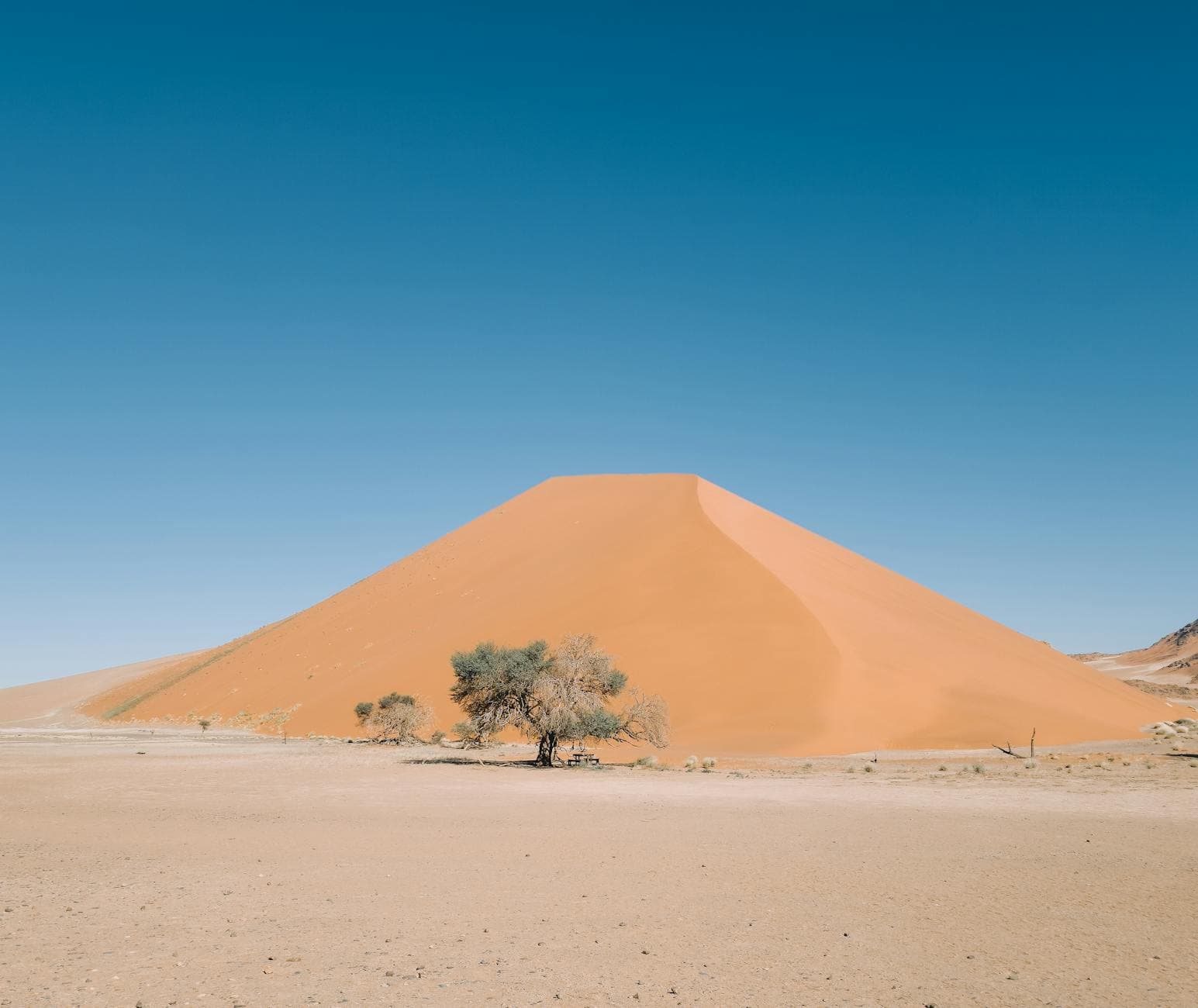
Namibia is a vast, sparsely populated country (2.6 million across 824,000 km²) on Africa's southwestern coast. English is the official language, the political system is one of Africa's most stable, and the **Namibian Dollar is pegged 1:1 to the South African Rand** (~18 NAD/USD). **NEW Digital Nomad Visa** allows remote workers 6-month stays (non-renewable, then exit + reapply) at **$2,000/mo income from non-Namibian sources**, fee approximately NAD 2,200 (~$124) on arrival. **First universal minimum wage in force from 1 Jan 2026: N$18/hr general (~N$3,510/mo full-time), N$15/hr domestic, N$14/hr agricultural** - historic milestone. Windhoek 1BR centre $400-$800/mo, suburbs $250-$400. Comfortable expat budget $1,473/mo. Western-style living from $1,176+/mo. With the Namib Desert, Etosha National Park, Skeleton Coast, and Fish River Canyon (world's 2nd largest) within driving distance, Namibia combines affordable living with extraordinary natural beauty.
The rest of the Namibia numbers
The figures that did not fit in the summary above.
| Figure | Detail |
|---|---|
| PIT0–37% | Progressive; bracket inflation indexing postponed to FY 2026/27 and 2027/28 |
| VAT15% standard | Zero-rated schedule amended to include state-acquired commercial properties |
| Economy+2.8% (2025); 72.4% debt/GDP | Slowing growth; SACU revenues declining; climate risks; 6.6% fiscal deficit |
| USD/NAD Rate~18 NAD/USD | Pegged 1:1 to South African Rand |
| Africa Leader of YearNandi-Ndaitwah - ALM 2025 | President named Africa's political leader of the year by African Leadership Magazine Persons of the Year 2025 Awards |
| Retirement Permit IncomeNAD 25K/mo (~$1,390) | Regular pension or investment income proof required; also health insurance, police clearance, residential address in Namibia |
The Namibia basics
10 essentials every expat should know - from the practical to the political.
Is Namibia actually your best option?
This page tells you what Namibia is like. It cannot tell you whether it beats the four other countries you should be looking at, because that answer changes with your passport. Income thresholds, tax treaties and citizenship timelines are all nationality specific, and the general rule is often not the rule that applies to you.
A Personal Relocation Assessment answers it for your case. You tell us your nationality, income, household and timeline, and we our expert researches it against the law as it stands: which countries you actually qualify for, the route, the current threshold with the instrument it comes from, and what is most likely to go wrong in a position like yours.

Food culture
Braai (BBQ) culture, German Bratwurst + bakeries, kapana street meat, game (oryx, kudu, springbok) - Germanic-African meat-driven plate
Explore

Festivals & traditions
German colonial heritage (Christuskirche, Bavarian Swakopmund), Himba + San tribal cultures, English as sole official language
Explore

Coast & nature
Skeleton Coast shipwrecks + dunes meeting ocean, Sossusvlei red dunes (Deadvlei), Etosha NP waterholes, Fish River Canyon (world's 2nd largest)
Explore

Heritage & landmarks
Sossusvlei dunes (Deadvlei), Etosha National Park, Christuskirche Windhoek, Fish River Canyon, Twyfelfontein rock art
Explore
6 reasons people stay longer than they planned
The pull of Namibia isn't one big thing - it's a stack of small ones, each compounding the others.
English-Speaking - No Language Barrier
Namibia is one of the few African countries where English is the sole official language (adopted at independence in 1990). Government, business, healthcare, education, and media all operate in English, making daily life seamless for Anglophone expats. Afrikaans and German are also widely spoken, adding a unique multilingual charm.
World-Class Natural Beauty
From the towering red dunes of Sossusvlei (the world's highest sand dunes) to Etosha's elephants, the Skeleton Coast's shipwrecks, and the Fish River Canyon, Namibia packs extraordinary landscapes into one country. Weekend trips from Windhoek reach all these destinations within 4–6 hours. The dark sky reserves offer some of the world's best stargazing.
Low Cost of Living with High Quality
A comfortable life in Windhoek costs $1,200–$2,000/month, including rent, food, transport, and entertainment. A modern 1-BR apartment costs $400–$700/month. Restaurant meals cost $5–$15. Yet the quality - private healthcare, fiber internet, modern supermarkets, and excellent wines - rivals much more expensive destinations.
Political Stability & Safety
Namibia has been a stable democracy since independence in 1990, with peaceful transfers of power and strong rule of law. It ranks 1st in sub-Saharan Africa for press freedom and among the top 5 for governance quality. While petty crime exists in cities, violent crime against expats is rare. The country is widely considered one of Africa's safest.
Growing Digital Infrastructure
Windhoek's fiber network delivers 50–100 Mbps, and MTC's 4G LTE covers all major towns. Starlink has launched in Namibia (2024), bringing reliable internet to remote locations. Several coworking spaces in Windhoek cater to remote workers. The government is exploring a digital nomad visa framework.
Unique Cultural Blend
Namibia's colonial heritage (German, then South African) has created a distinctive culture where you'll find German bakeries, Afrikaans braai culture, and traditional Herero attire on the same street. Windhoek has craft breweries (Namibian beer is world-class), fine dining, and a vibrant arts scene, while the Himba communities in the north preserve ancient traditions.
2 cities, 2 different lives
Pick the rhythm that fits - capital buzz, beach mornings, or a slow-living escape.

Windhoek
Africa's cleanest, safest capital - modern infrastructure, German-Namibian culture, and stunning mountain scenery at 1,700m altitude
$1,200–$2,200 /mo
Remote workers, families, nature lovers, retirees

Swakopmund
Namibia's coastal gem - German colonial charm, adventure sports capital, and a cool Atlantic climate where desert meets ocean
$1,000–$1,800 /mo
Adventure lovers, retirees, remote workers, nature enthusiasts
Everything, in plain words
Visa rules, healthcare, schools, taxes - written like a friend would explain it, not like a brochure.
Visa & Residency
Namibia's immigration system is employer-driven for work permits, with options for investors, retirees, and those with Namibian family ties. There is no formal digital nomad visa yet, though the government has discussed introducing one. Tourist visas (90 days for many nationalities) allow exploring before committing, and work permit processing typically takes 4–12 weeks through the Ministry of Home Affairs.
Read 🏥Healthcare
Namibia has a dual healthcare system - government hospitals provide free or low-cost basic care, while private hospitals and clinics offer higher-quality services comparable to South African standards. Most expats use private healthcare, which is affordable by international standards. Windhoek has the best medical facilities in the country, with Mediclinic and Rhino Park Hospital offering modern diagnostics, surgery, and specialist care.
Read 💰Cost of Living
Namibia offers a remarkably affordable cost of living by global standards, with the Namibian Dollar (NAD) pegged 1:1 to the South African Rand providing currency stability. There is no VAT-free status for expats - Namibia levies 15% VAT and progressive income tax up to 37%. However, the low cost of goods, housing, and services means take-home purchasing power is excellent. Banking is modern and English-language, dominated by First National Bank (FNB), Standard Bank, and Bank Windhoek.
Read 🏠Housing
Namibia's housing market is rental-friendly for expats, with apartments and houses available across a range of budgets. Windhoek has the most options, from modern apartments in Klein Windhoek to family villas in Ludwigsdorf and Olympia. Swakopmund and Walvis Bay offer coastal living at lower prices. Most expats rent initially and some purchase property - Namibia allows foreign property ownership with minimal restrictions.
Read 💼Work & Business
Namibia's economy is driven by mining (diamonds, uranium, gold), tourism, agriculture, and a growing services sector. The job market for expats is concentrated in mining, NGOs/development organizations, tourism, IT, and professional services. Unemployment among Namibians is high (~33%), which means work permits require demonstrating that no qualified local is available. Remote workers are an emerging segment, attracted by Namibia's quality of life and connectivity.
Read 🌆Daily Life
Namibia is widely considered one of the safest countries in sub-Saharan Africa, with a stable democracy, professional police force, and welcoming attitude toward visitors. However, property crime (break-ins, car theft) occurs in cities, and basic security precautions are necessary. The vast open landscapes are safe for travel, and tourist areas are well-patrolled. Wildlife encounters require caution in rural areas, and road safety on long desert highways demands attention.
Read ✈️Moving Guide
Moving to Namibia is relatively straightforward - the country is welcoming, English-speaking, and has a functioning but informal relocation support network. Most expats arrive by air (Windhoek or Walvis Bay), secure temporary accommodation, and spend the first few weeks setting up housing, banking, and transport. Shipping belongings from abroad is possible but many expats buy locally. The main adjustment is the pace of bureaucracy and the need for a car from day one.
Read 📚Education
Namibia has a well-structured education system with government schools operating in English, plus private and international schools offering higher standards and specialized curricula. Windhoek has the best selection of schools, including institutions following the Cambridge (IGCSE), South African (IEB/CAPS), German, and Finnish curricula. School fees at private institutions range from NAD 20,000 to NAD 80,000+ per year.
Read 🌅Lifestyle
Life in Namibia offers a rare combination - modern comforts in Windhoek, world-class natural beauty within driving distance, genuine cultural richness, and all at a fraction of the cost of living in Europe or North America. The pace is relaxed, the people are warm, and the landscape is breathtaking. For nature lovers, outdoor enthusiasts, and those seeking a simpler, more connected way of living, Namibia delivers an extraordinary quality of life. The main trade-offs are limited urban entertainment, a small job market, and the vast distances between populated areas.
Read 📈Investing
Everything expats need to know about investing in Namibia - from property and stocks to tax-efficient strategies, brokerage access, and building wealth abroad.
ReadTools to plan your move to Namibia
Practical tools to turn an idea into a real plan - pick a season, time your visa, build a budget, even live a day before you go.
Best time to move to Namibia
Season-by-season - weather, visa timing, rental markets, and expert tips
Windhoek cost of living
Full monthly budget breakdown - rent, food, transport, utilities
Country match quiz
Eight quick questions, AI-matched country shortlist for your lifestyle
Visa finder
Search visa options by nationality, budget, and stay length
A day in Namibia
Live a perfect day with AI - real cafés, costs, and routes
Relocation plan
Step-by-step AI moving timeline tailored to your situation
Namibia vs the rest
See how Namibia stacks up against other popular expat destinations.
Where Namibia ranks
See where Namibia sits in our independent expat rankings - cost, safety, healthcare, and more.
Cheapest Countries for Expats
Ranked list of the most affordable countries for expats in 2026. Monthly budget, cost of living, internet speed, and city guides for each destination.
Countries Under $1,500/Month Cost of Living
Complete list of countries where a single expat can live comfortably on under $1,500 per month. Budget breakdowns, internet speeds, and city guides included.
Countries Where $2,000/Month Is Enough
All countries where a single expat can live well on $2,000 per month or less. Ranked by cost of living with budget details, internet, and English proficiency.
Best Countries for Remote Workers
Top countries for remote workers ranked by internet speed, cost of living, and English proficiency. Find your ideal work-from-anywhere destination in 2026.
Countries With the Fastest Internet
Ranked list of countries with the fastest broadband internet speeds for expats. Average Mbps, cost of living, and city guides for each destination.
Best Countries for Retirement Abroad
Warm-climate countries where one person can live on $2,500/month, ranked safest first by Global Peace Index. Portugal leads, then Malaysia and the Maldives. 2026.
Honest answers
The questions everyone asks before they pack a single box.
How much does it cost to live in Namibia as an expat?
What visa do I need to move to Namibia?
What is healthcare like in Namibia for expats?
What are the best cities to live in Namibia as an expat?
Is Namibia a good place to live as an expat in 2026?
Personal Relocation Assessment
Can you actually move to Namibia?
This page is general. Your case is not. Our relocation expert researches your nationality, income and timeline against the law as it stands, names the instrument behind every figure, and tells you where you actually qualify.
Get my assessmentExpat Insights, weekly
Visa updates, cost-of-living shifts, and real expat stories from Namibia - straight to your inbox.
Which country is right for you?
Answer 6 quick questions about your budget, lifestyle, and priorities. Our AI ranks 122 countries and builds a personalised relocation plan.